![Exploring Invertebrates: 10 Picture Books to Introduce Animal Characteristics [ep. 9]](https://www.naturallyteaching.com/wp-content/uploads/2024/07/exploring-invertebrates-books-header-300x200.png)
Science
Frogs and Toads Together: Why do Amphibians Group Up?April 11, 2025

An elementary teacher science blog
Affiliate disclosure: As an Amazon Associate, I may earn commissions from qualifying purchases from Amazon.com. This is at no extra cost to you. If you’d like to learn more, check out my disclaimers page.
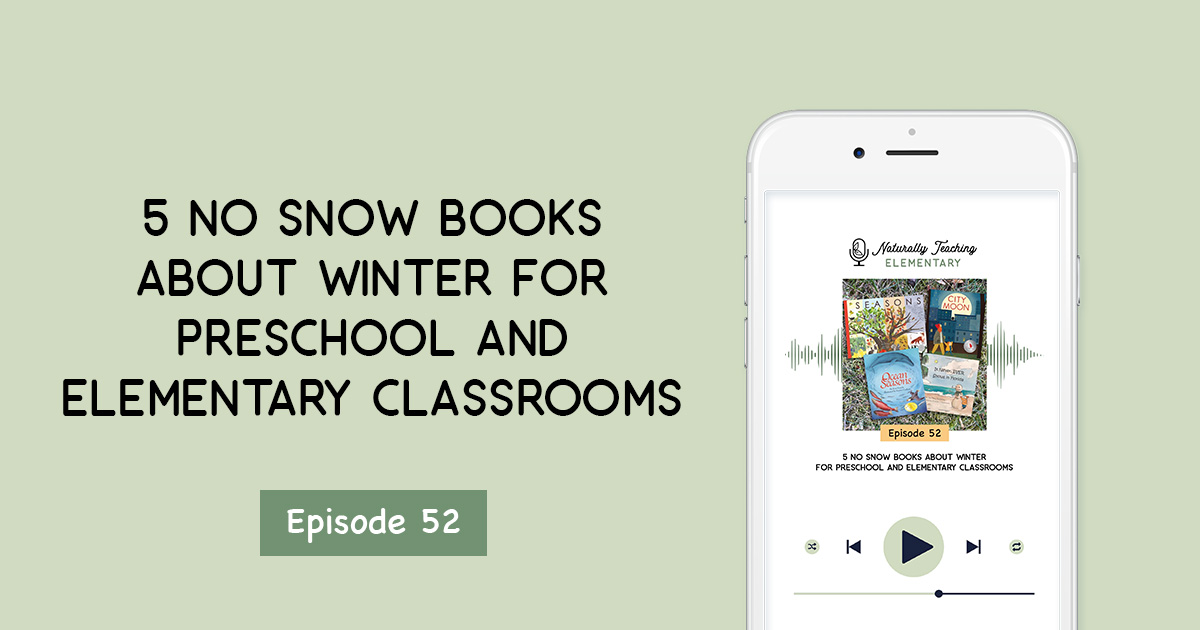
Winter is a very diverse season depending on the region you live in and its climate. However, picture books don’t reflect that meteorological diversity. Your learners have probably seen books about winter that include snow whether they live in a place that gets snow or not; but it’s unlikely that they’ve read a picture book that takes place in winter and doesn’t show snow. For those of you who live where there are mild winters, I’ve got you covered!
In this episode, I share 5 books about winter that are set in regions that don’t get snow or show winter seasonal signs that are universal. Listen in to discover some amazing no snow books about winter for preschool and elementary classrooms to use this school year!
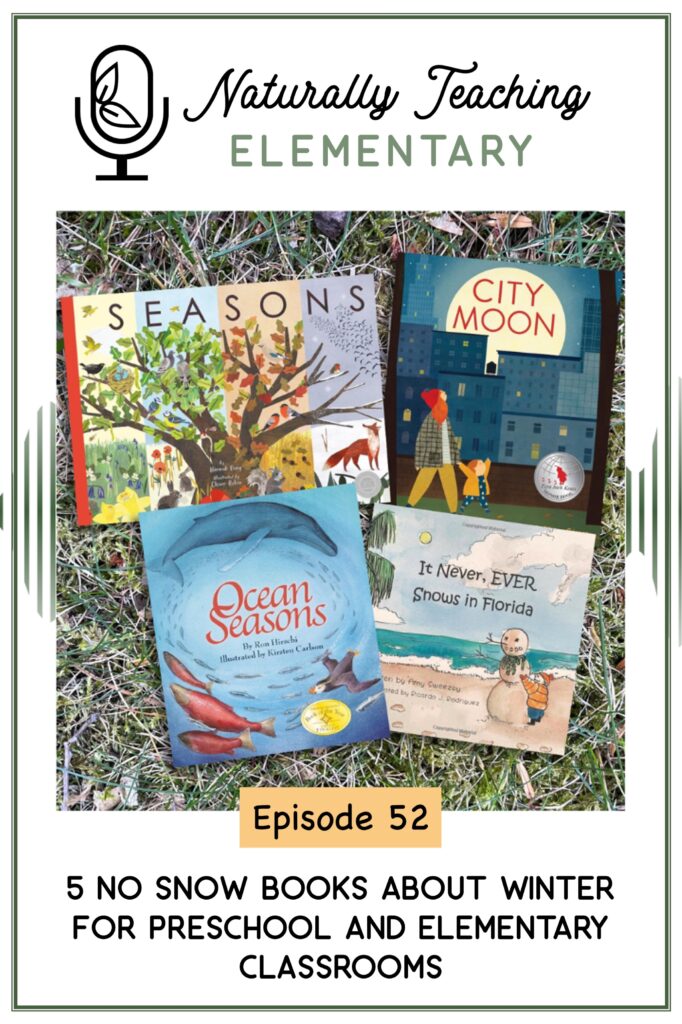
No snow books about winter for preschool and elementary classrooms covered in this episode include:
This was a challenging list to put together since there aren’t very many books about mild winters; hopefully publishing companies will see this gap and help fill the need for preschool and elementary learners everywhere. I did find that Ron Hirschi also has a book called Winter is for Whales which is about seasons in Hawaii and would be a great additional book to add to your no snow books about winter for preschool and elementary classrooms list; I just didn’t include it since it’s more niche than Ocean Seasons.
I also found a book celebrating snow in Louisiana since it’s such a rare event. If you’re located in an area that doesn’t get snow, but you want to showcase times when rarities happen, you could check out the book So Much Snow! A Joyous Celebration of the 2025 Louisiana Snowstorm by The Advocate. It’s a compilation of pictures from professional photographers depicting Mardi Gras beads on snowmen, palm trees covered in snow, families playing in snow, and more.
Affiliate Disclosure
I only endorse things that I’ve personally used, come highly recommended by trusted peers, or I’ve done extensive research on. As an Amazon Associate, I may earn commissions from qualifying purchases from Amazon.com. This is at no extra cost to you, the commission is covered by the company.
I am recommending products that I think will be genuinely helpful and useful, and not because of the small commissions that I receive. Please only purchase items if you believe that they will help you achieve your educational goals. If you’d like to learn more, check out my disclaimers page.
Teaching elementary-aged children is a rewarding experience, but as educators and parents, finding the time and resources to create engaging lessons can be a challenge. That's where this podcast comes in. Welcome to Naturally Teaching Elementary.
I'm Victoria Zablocki, a certified elementary teacher turned outdoor educator. With over a decade of experience coaching teachers on effective teaching methods, I'm passionate about teaching the whole child with authentic and place-based experiences in school and home settings. Join me as we explore strategies for teaching with practical teaching tips, insightful interviews, picture book reviews, and more. So let's grow together.
All right. Welcome back to the Naturally Teaching Elementary Podcast. My name is Victoria Zablocki and I'm your host. So winter is officially here, and your students likely had tons of tales from their winter break adventures. But not all of these tales will look and sound the same.
Some of your students may have gone on vacation to a warmer part of the country, while others may have just stayed home. And your students' tales may even sound different than the tales of my students, depending on where you are in the country. I'm in Michigan, which means that we got snow, ice, and windstorms over break.
But not everyone's winter looks that way. That's why I'm bringing you a list today of five picture books that are about winter but without snow. This actually was a very challenging list to put together since books about winter that don't include snow are super hard to come by.
I'm talking to you publishing companies when I say we need more books about mild winters in the south. And if you've listened to my other episodes about picture books, I'm sure that you've caught on to the fact that I'm very passionate about teaching science concepts with the help of children's literature. And it's for good reason.
Research has shown that integrating science and literacy has many benefits, including saving teachers time in their schedule, improved attitudes of children towards science, better overall performance in reading and science, and so many more. For more information about benefits and methods for integrating science and literacy, check out my blog post, “Teaching with Books: How to Integrate Science and Literacy for Elementary Classrooms.” Now let's get into this list of no-snow books about winter for preschool and elementary classrooms.
[2:12]
So book number one is City Moon by Rachael Cole, illustrated by Blanca Gomez. So this first book isn't explicitly about winter, but more of a sign that winter is coming or has arrived. This book is set in the fall and mentions how the sun sets before the child in the story goes to bed.
The child and their mother go for a walk looking for the moon. And this story is set in the city and the child looks around as the moon hides behind buildings. They talk about stars, the moon's reflection, lights from cars, and how people are taking time to get home from work, make dinner, and then put their kids to bed.
The child and their mother then return home and she puts the child to bed. Again, this story isn't explicitly about winter, it's actually set in the fall, but it has a universal sign that winter's on its way, which is the sun setting earlier in the day. This could be a good book to introduce your winter seasonal signs unit for children experiencing milder winters, and it's also a very relatable and interesting concept, as many kiddos are surprised when the sun sets so early in the day.
[3:10]
Book number two is It Never Ever Snows in Florida by Amy Sweezey, illustrated by Ricardo J. Rodriguez. This book is all about winter in Florida and is actually written by a Florida meteorologist.
The story follows a little boy named AJ that lives in Florida and is sad that he's never seen snow. He has cousins that live in Michigan and they get to go ice skating outside, make snow angels, and have snowball fights. He wishes that it would snow in Florida, but his meteorologist mom explains that snow comes when cold air from the North Pole brings frozen water to the land.
But Florida is too far away from the North Pole, so the air warms up so much that Florida usually gets rain instead. The story ends when AJ and his mom go to the library to look up pictures of a few times when it snowed in Florida and how it's rare, but it does happen occasionally. This book is a great illustration of how snow is not the only indicator of winter.
The author brings up frost on the grass, colder temperatures, and extra rain as signs that the winter season has come. This will help children in warmer climates to see that their winter is just like other kids' winters, even if they don't have snow. It also makes it okay for your students to be sad that they don't have snow, as AJ mentions multiple times throughout the story that he sad he's never seen snow.
This book is a little trickier to come by, but I found a YouTube video of Amy Sweezey, the author, reading it aloud, and I'll make sure to put that link in the show notes.
[4:32]
Book number three is In a Mississippi Winter by Kathy Chase Young, illustrated by Kelly Stanford. This book is about winter in Mississippi, but is also the best narrative that I found for kids experiencing mild winters without snow so far.
The story begins with a Mississippi teacher discussing the different seasons with her students. She holds up pictures of spring, summer, fall, and then winter. The picture of winter includes snow, and the children seem confused since they don't experience snow in winter.
The teacher doesn't really catch on right away and explains that winter includes cold temperatures and snow, and the kids kind of push back, and the teacher realizes that she hasn't depicted their winter well. So the next day, she has different, “Mississippi Winter” stations for the students. She put together a table for the students to create snowflakes, and then they tape them to the window, and they use grits as loose parts that they get to write their name in similar to kids writing in the snow.
They also got to do a sort where they put pictures of Mississippi Winter onto the map and then put the non-Mississippi Winter pictures in a basket. Then they went outside for a Mississippi Winter walk where they got to see their breath on the air. They heard quiet instead of frogs and birds.
They found frost on the leaves. They saw a chimney releasing smoke, and they got red noses from the cold. I was really hoping to find a book that didn't focus on snow.
And although there is snow mentioned in this book, it does show signs of winter for an area that doesn't readily get snow. It also shows students that it's okay to question the fact that most books about winter include snow when not all regions get snow. I also like that the teacher takes the students outside to get to experience their local seasonal signs. And this book is even harder to come by, so I'll make sure to include a YouTube link in the show notes so you can watch it with your students since buying a copy is like 50 bucks right now.
[6:19]
Book number four is Ocean Seasons by Ron Hirschi, illustrated by Kirsten Carlson. This book is all about the seasons, but in the ocean.
So it begins in spring and how colorful it can be. And Hirschi hits on different life stages of the fish and other ocean inhabitants. He also shares how whales make bubble nets to capture the food they eat.
And in the summer, Hirschi highlights the warm sun and the baby animals that are born. He also talks about the bioluminescent property of plankton in the ocean. And then autumn begins with strong winds and the absence of the bioluminescent plankton as they die for the year.
Hirschi also hits on the salmon migration that takes place in fall and all the animals that hunt the migrating salmon. When winter comes, Hirschi brings up the change in temperature and also the migration of whales to southern waters. Most people think of babies being born in the spring, but Hirschi shares that the whales that move to the southern waters have their babies in the tropical winter instead.
And the book ends when the seasons return to spring and the whales migrate back to their northern waters. I like this book because it shows that even in the big blue, there are differences in the seasons. These seasons more closely reflect the mild winters of the southern half of the US and do not have snow mentioned anywhere.
It could be a great option as a comparison story to one of the other books on this list or to a more traditional winter book that includes snow.
[7:37]
Book number five is Seasons by Hannah Pang, illustrated by Clover Robin. And this book is all about the changing seasons, but it's shared from different parts of the world with different climates and ecosystems.
Using transformative pages, or pages that are different sizes, Pang shows the changes throughout the season for each ecosystem within the same section. The display of each ecosystem is lovely, with Robin showing some of each season within one spread, giving your students a look into spring, summer, fall and winter for each unique place. The ecosystems the reader travels to in this book include a meadow with a European oak, the Arctic, the wilds of Alaska, a mangrove in Australia, the Yellow Dragon Valley in China, and grasslands in Kenya.
Pang shares information about the weather, the animals and the plants during each of the seasons in these unique locations. This book is chocked full of great information and could lead to amazing discussions about the similarities and differences between the seasons around the world. Your students will see winters with snow, but also winters without.
They'll see the changes in light and how animals respond to the shifts in the seasons. This is one of my favorite options on this list, a very genuine, diverse and enjoyable read.
[8:46]
In a nutshell, today we talked about five no snow books about winter for preschool and elementary classrooms to introduce signs of more mild winter like those in the southern US.
Titles that were summarized include City Moon by Rachel Cole, illustrated by Blanca Gomez. It Never Ever Snows in Florida by Amy Sweezey, illustrated by Ricardo J. Rodriguez.
In a Mississippi Winter by Kathy Chase Young, and illustrated by Kelly Stanford. Ocean Seasons by Ron Hirschi, illustrated by Kirsten Carlson, and Seasons by Hannah Pang, illustrated by Clover Robin. And if you're looking for more winter picture books that happen to have snow, check out my article “16 Wonderful Children's Books About Winter for Elementary Teachers” on naturallyteaching.com, or you can follow the link in the show notes.
You could also check out “Episode 34: 9 Winter Picture Books to Help Introduce Seasonal Signs, Snow and Animals in Winter.” That also includes more books about winter that have snow as well.
So thanks for taking time to listen today. I know you're busy and I truly appreciate the time you take to tune in. If you have any questions, wonderings, or know snow books about winter for preschool and elementary classrooms that you use, get ahold of me on Instagram at naturally.teaching, or you can email me at victoria@naturallyteaching.com. And don't forget to check out the show notes for this episode at naturallyteaching.com/episode52.
Thanks again for joining me today. And until next time, keep exploring, keep learning, and keep naturally teaching. Thank you so much for tuning into today's episode of the Naturally Teaching Elementary Podcast.
I hope you found it informative, inspiring, and full of actionable insights to enhance your teaching journey. Connect with me on social media for more updates, science tidbits, and additional resources. You can find me on Instagram and Facebook at naturally.teaching.
Let's continue the conversation and share our passion for teaching elementary-aged children together. Don't forget to visit my website at naturallyteaching.com for all the show notes from today's episode. If you enjoyed today's episode, please consider leaving a review on your favorite podcast platform.
Your feedback helps me improve and reach more educators like you. Thank you again for listening, and until next time, keep exploring, keep learning, and keep naturally teaching.

0