![Exploring Invertebrates: 10 Picture Books to Introduce Animal Characteristics [ep. 9]](https://www.naturallyteaching.com/wp-content/uploads/2024/07/exploring-invertebrates-books-header-300x200.png)
![Learning Gardens: Creating Dynamic Outdoor Classrooms with Victoria Hackett [ep. 8]](https://www.naturallyteaching.com/wp-content/uploads/2024/07/learning-gardens-header-300x200.png)
Science
Frogs and Toads Together: Why do Amphibians Group Up?April 11, 2025

An elementary teacher science blog
When people hear outdoor education, they think forest schools – schools with vast amounts of nature. The wonderful and amazing thing about outdoor education though is that it really is accessible to all. Teachers in suburban and urban schools don’t often think that they have enough nature to share with their students but I’m hear to help you see that you have options.
In this episode, we’ll talk about 3 nature spaces you can take your students for learning. Being outside is so beneficial for your students, regardless of how much or how little nature you have available to you. So let’s start building your confidence to get your kiddos outside and reaping the benefits of your most organic and natural lab.
The 3 nature spots to take your students from urban schools discussed in the episode are:
[0:00]
Teaching elementary-aged children is a rewarding experience, but as educators and parents, finding the time and resources to create engaging lessons can be a challenge. That's where this podcast comes in. Welcome to Naturally Teaching Elementary.
I'm Victoria Zablocki, a certified elementary teacher turned outdoor educator. With over a decade of experience coaching teachers on effective teaching methods, I'm passionate about teaching the whole child with authentic and place-based experiences in school and home settings. Join me as we explore strategies for teaching with practical teaching tips, insightful interviews, picture book reviews, and more. So let's grow together.
All right. Welcome back to the Naturally Teaching Elementary Podcast. I'm excited to talk about something today that I haven't really hit on with this podcast yet, but it's very important to address. I'm talking about teaching outside in urban schools. When people hear outdoor education, they typically think about rural and sometimes suburban schools.
But I'm here to say that outdoor education has its place in every single school, regardless of their surroundings. And if you teach at an urban school or you homeschool in an urban setting, you may be thinking that I'm crazy. What sort of nature do you have to offer your learners?
Well, the goal of this episode is to share ways that you can get your students outside, help them benefit from learning in nature, and to change your mindset about nature education. So, when it comes to teaching outside in urban schools, I think of three different categories of ways that you can get outside, if you will.
[1:33]
The first category is using the space you already have. If what you have available to you is grass or woodchips surrounding your playground, go there. No space is too small. One of my favorite activities to get children focused outside is to do a hula hoop observation.
This is a widespread activity in outdoor ed, but it's a great way to make a small patch of nature for your students to focus on. It could also have the opposite effect in urban schools. So by using the hula hoop to focus, your students aren't looking at the lack of nature or how small their green space is.
They're looking at their observational window, which is the same size as all of their classmates, kind of giving the illusion of more space.
Also a hesitation I've heard a lot before from teachers in both urban schools and suburban schools is that their school doesn't have a pond, a forest, or a meadow. And I'm here to share that learning in nature doesn't mean you have to have diverse ecosystems.
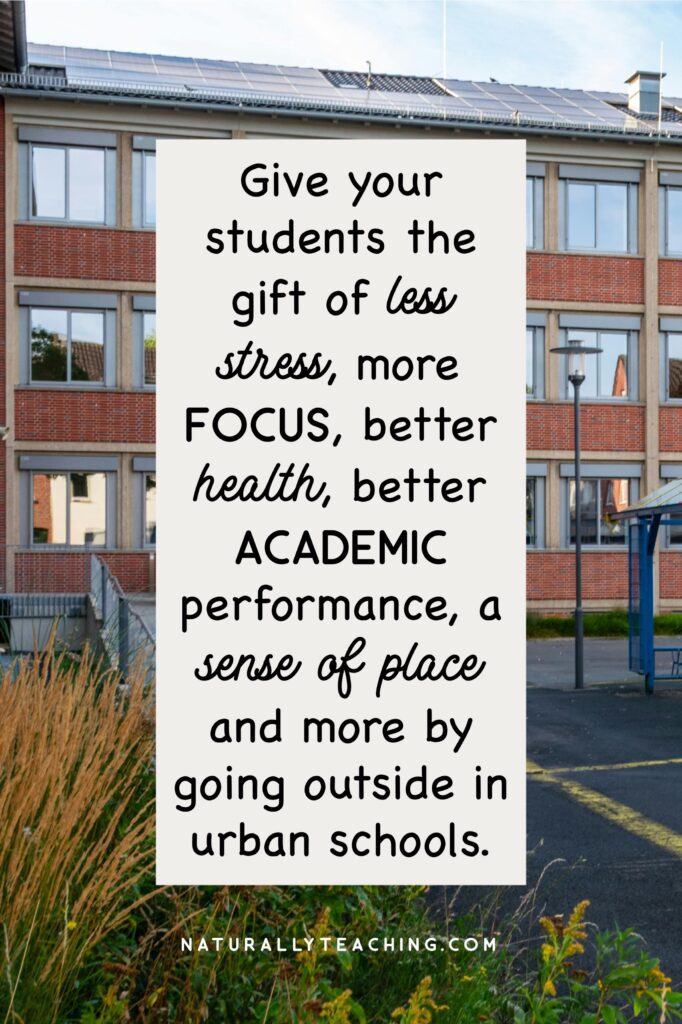
There's so much research out there about the benefits of being outside, just simply being outside. So if you don't have a forest, a pond, a meadow, the bayou, it's all good. You're still giving your learners the gift of less stress, more focus, better health, better academic performance, a sense of place, and more developed social-emotional skills just by getting into whatever nature you have.
Of course, it's great to have diverse ecosystems. Don't get me wrong, but outdoor education has its place in every single school, regardless of their nature surroundings.
[3:04]
The second category for getting outside in urban schools is creating focused nature space. So if I didn't convince you that you can go outside without diverse ecosystems, consider adding nature spaces to your schoolyard.
One way to do this is to let a corner of your green space go. Work together with your administration and maintenance staff to section off a portion of your schoolyard to let nature take its course.
It's really important to have both admin and maintenance on board with this decision, its purpose, and also its location. I've seen it multiple times where teachers develop a wild space in their schoolyard, and animals are starting to find it, and everyone is super excited about their outdoor lab. Then, a maintenance staff member mows it over.
It can be devastating and discouraging to the teachers and the students involved when this happens. One way to prevent this from happening is to have a physical barrier, like a fence, and optionally a sign on that physical barrier as a reminder that this space is a learning lab and not just weeds. Another way to add focused nature space to your schoolyard is to plant gardens.
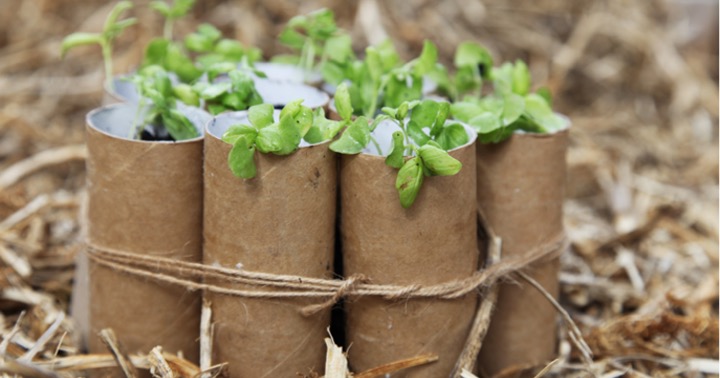
You can do this in a few different ways. You can add raised garden beds where you plant native plant species or crops. You can also create a community garden in the ground or a native plant garden in the ground.
A note to keep in mind, if you choose to plant gardens with crops, someone will have to commit to taking care of the crops during the summer if your school doesn't follow a balanced calendar. The same goes for a native plant garden, but after the first couple of years, they'll be more self-sufficient and can mostly rely on your local rain patterns. If this sounds like a good plan for you and your school, you should check in to garden grants to help you fund these sorts of projects.
There are tons of grants for school gardens, both crop-based and native plant-based. To get an idea of where to start looking for garden grants, check out my article, “Garden Grants and Plans: Where to Look for Funding and How to Prepare for Success”.
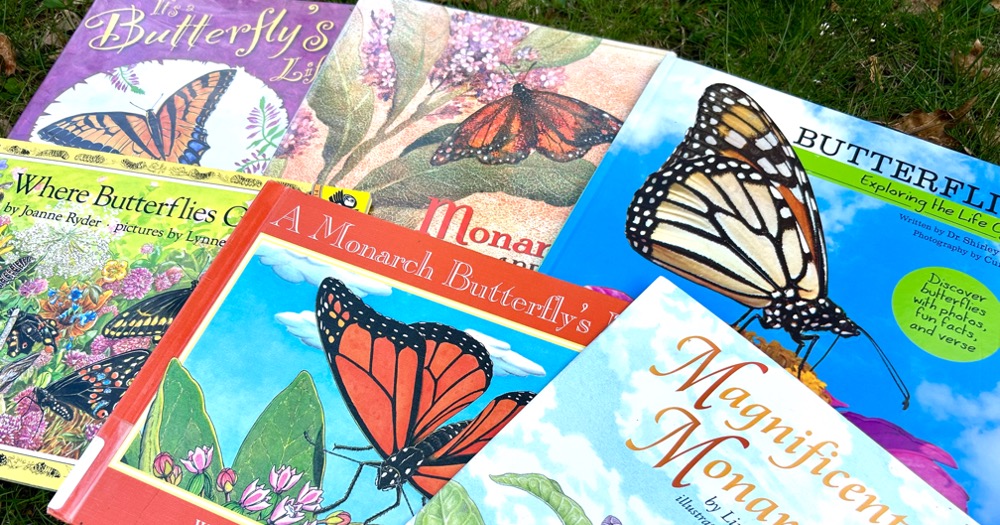
Or, if you're looking specifically to plant a Monarch Way Station, which is a special kind of native plant garden, you could check out my article, “A Raising Butterflies Kit for the Classroom: A Conservation Conversation”, or “Episode 20: Six Animal Migration Activities for Elementary Classrooms”, where I describe information and provide links to Monarch Way Station specific details. And I'll make sure to put links for all of those resources in the show notes.
[5:24]
The third category is visiting already established nature spaces. If you have them close by, you could walk to a green space such as a park, a safe vacant lot, neighboring gardens or you could take a field trip.
If you choose to go this route, there are a few things you should do before leaving school grounds. First, make sure you get permission from admin and possibly caregivers, depending on your school's policy. This may count as a field trip and you likely have to have caregiver permission and most definitely have to have the support of your administration.
So check in with admin first. If it's a go, make sure you find out what other permissions you need to have before committing to the walk. Once you have permission, you'll want to prep your kids too.
Practice walking together multiple times on school property before leaving school property. Decide what would be the safest way to move through the public space. Should your students walk in a line to get from point A to point B?
Do you want them to walk in pairs holding hands to keep everyone safe? How will you handle crossing streets? Practice these routines several times around your school first, so that your students know what to expect and how to keep themselves safe.
The fewer unknowns when they get into the public, the better for you and for them. Something else that would be helpful to both you and your students is to see if you can get additional help on the days you want to leave school property. You could consider asking for caregiver volunteers to help, similar to chaperones for a field trip.
Having additional adult support could give you peace of mind that your students will be safe moving through the public space to get to your destination. It will also be beneficial for your students to have extra help while in the offsite space. You could assign different chaperones to different tasks to help your students have more hands-on assistance.
And if you haven't done much outdoor teaching, check out “Episode 6: 5 Outdoor Education Safety Tips for Teaching Outside”, to hear about 5 different ways to practice safety outside with your learners. These tips and tricks can help you with your offsite excursions as well. And if you're interested in taking a nature field trip, check out “Episode 23: Planning a Field Trip Made Easier with Education Director James Dake”. James explains what to look for in a quality field trip, and he includes tips and tricks to having a successful day away from school.
[7:41]
So, in a nutshell, we talked about 3 different ways you can get your students outside for learning in urban schools. We talked about using the nature you have around your school, adding nature to your schoolyard, and visiting nearby nature.
Start with what you feel comfortable with, and as your confidence grows, you can start to add more of the other categories to your teaching toolbox. I hope that talking through these different ways of getting outside at urban schools helped you to see that you can do outdoor education. Not only is it possible, it is 100% beneficial for your students.
So, thanks for taking time to listen today. I know you're busy, and I truly appreciate the time you take to tune in. If you have any questions, wonderings, or ways that you get outside in urban schools, get ahold of me on Instagram at naturally.teaching, or you can email me at victoria@naturallyteaching.com.
And don't forget to check out the show notes for this episode at naturallyteaching.com/episode54 for all those links that I mentioned. Thanks again for joining me today, and until next time, keep exploring, keep learning, and keep naturally teaching.
Thank you so much for tuning in to today's episode of the Naturally Teaching Elementary Podcast. I hope you found it informative, inspiring, and full of actionable insights to enhance your teaching journey. Connect with me on social media for more updates, science tidbits, and additional resources. You can find me on Instagram and Facebook at naturally.teaching.
Let's continue the conversation and share our passion for teaching elementary age children together. Don't forget to visit my website at naturallyteaching.com for all the show notes from today's episode. If you enjoyed today's episode, please consider leaving a review on your favorite podcast platform.
Your feedback helps me improve and reach more educators like you. Thank you again for listening, and until next time, keep exploring, keep learning, and keep naturally teaching.

0