![Exploring Invertebrates: 10 Picture Books to Introduce Animal Characteristics [ep. 9]](https://www.naturallyteaching.com/wp-content/uploads/2024/07/exploring-invertebrates-books-header-300x200.png)
Science
Frogs and Toads Together: Why do Amphibians Group Up?April 11, 2025

An elementary teacher science blog
This topic was by listener request – shout out to Sue! Thanks so much for your suggestion for writing about spring frogs and toads and ways to teach very spring-specific concepts! Spring is a unique time for frogs and toads as it’s the beginning of their mating season and a lot of things happen. Press play to hear about this unique time and ways to engage your learners!
In this episode, we’ll talk about frogs vs toads and other herps activities that are paired with Next Generation Science Standards for grades K-5. I’ll share the standard that inspired the activity, how the activity relates to frogs vs toads, and descriptions of how to use the activity with your learners.
The following standards are paired with frogs vs toads activities in the episode:
If you’re new to the term herps, it’s a word scientists use to describe the collective group of reptiles and amphibians. This can be confusing as reptiles and amphibians are often interchanged but are truly two different groups of animals. Reptiles are animals that are covered in scales, are cold-blooded, lay their eggs on land, and their young look like miniature versions of their adults; some examples of reptiles are snakes, turtles, lizards, and crocodiles/alligators. Amphibians are animals that have moist skin, are cold-blooded, lay their eggs in water, and their young experience metamorphosis; some examples of amphibians are frogs, toads, salamanders, and caecilians.
[0:00]
Teaching elementary-aged children is a rewarding experience, but as educators and parents, finding the time and resources to create engaging lessons can be a challenge. That's where this podcast comes in. Welcome to Naturally Teaching Elementary.
I'm Victoria Zablocki, a certified elementary teacher turned outdoor educator. With over a decade of experience coaching teachers on effective teaching methods, I'm passionate about teaching the whole child with authentic and place-based experiences in school and home settings. Join me as we explore strategies for teaching with practical teaching tips, insightful interviews, picture book reviews, and more.
“Teaching elementary-aged children is a rewarding experience, but as educators and parents, finding the time and resources to create engaging lessons can be a challenge. That's where this podcast comes in. Welcome to Naturally Teaching Elementary.
So let's grow together. All right, everybody, welcome back to the Naturally Teaching Elementary Podcast. My name is Victoria Zablocki and I'm your host.
So at the beginning of this year, I started a new structure for this podcast so that I could bring you episodes that are typically only about 10 to 15 minutes long. To achieve this goal, I spend the first Monday of each month introducing picture books that illustrate a particular theme that can be investigated during that time of the year. And then the next three weeks are about activities for Next Generation Science Standards that relate to that topic from the first week.
March is the first month this year that there are actually five Mondays, so I put a call out to my email list asking what they'd like to hear about in this bonus podcast episode. So by listener request, this week I'm going to focus on what frogs, toads and other herps are doing this time of year. And if you're new to the term herps, it's a word scientists use to describe the collective group of reptiles and amphibians.
This can be confusing as reptiles and amphibians are often interchanged, but are truly two different groups of animals. So a quick and dirty explanation, reptiles are animals that are often covered in scales, are cold-blooded, lay their eggs on land, and their young looks like miniature versions of the adults. Some examples of reptiles are snakes, turtles, lizards, and crocodiles and alligators.
On the flip side, amphibians are animals that have moist skin, are cold-blooded, lay their eggs in water, usually, and their young experience metamorphosis. Some examples of amphibians are frogs, toads, salamanders, and caecilians. So with that quick background knowledge, let's dive into some activities for frogs vs toads and other herps in spring that align to K-5 NGSS standards.
What I'm going to do is I'm going to describe an activity for sister grades, so kindergarten and third grade, first and fourth grade, and then second and fifth grade.
[2:30]
So for kindergarten and third grade, the Next Generation Science Standards that I pulled were K-ESS3-1: Use a model to represent the relationship between the needs of different plants and animals, including humans, and the places they live, and 3-LS2-1: Construct an argument that some animals form groups that help members survive. So I know that the title of this episode promises frogs vs toads, but I'm actually going to start with the “other herps” part and describe a salamander activity for kindergarten and third grade.
So in the spring, mole salamanders, such as Blue-spotted salamanders, Spotted salamanders, and Tiger salamanders, go through a localized migration where they move from their underground tunnels to vernal pools to mate. So they do this during the first warm, rainy nights in early spring after the ground has thawed. These unique migration nights are known as “big nights” amongst scientists and other herpetologists.
When the salamanders feel the right condition, they come out of their burrows and move through the forest to find a vernal or spring pool. When they reach their destination, the males do a courtship dance and then they lay spermatophores, which the females collect for fertilization. So for the activity for kindergarten and third grade, I'm suggesting doing a salamander migration activity.
And to do this, you're going to prepare by gathering poker chips or something small that you can spread out in the grass to represent those spermatophores. After you find something that will work, preset or seed a large area with the poker chips, making sure to spread them out so that there's space between each poker chip, but they're also gathered together in one general area and then there's space with grass around it. Bring your class or your learners out and tell them that they're going to be salamanders finding the vernal pool where they will lay eggs.
To do that, you're going to hold up an example of what they're looking for, aka your poker chip or other material, and that piece represents part of the egg-laying process that they need in order to be successful. Let them know the boundaries where they're going to be looking, making sure that you include a very large space, not just the space with your poker chip patch, but also space with grass around that poker chip space. Tell them that they're starting in burrows or tunnels in the ground and show them the designated space where they'll start, and then remind them of your attention getter that you'll use to end the round, or you could designate a place where they could go once they collect a spermatophore, showing they were successful.
Then you can say “go” or “migrate”, something like that, and let them look around for the “vernal pool”. Let them search until everyone is successful or for a fixed amount of time. For kindergartners, this first round represents the salamander finding what they need in a different space than their typical habitat.
These types of salamanders usually live underground throughout the year, but in spring, if they want to be able to lay eggs, they need to find a vernal pool. Their underground tunnels don't have the water that salamander eggs need to grow, and their tunnels also don't have other salamanders to lay eggs with. Thus, they need to move to a different space to fulfill their needs.
For third graders, I would suggest doing a successive round to illustrate how some animals form groups for survival. For this round, gather all of the poker chips from the learners that they collected in the first round, have them close their eyes except maybe one or two students, and then put them in the same patch of grass you had hid them before. You can have one or two students keep their eyes open for this round, and that represents salamanders that revisit the same vernal pool that they were born in, which is something that happens in nature too.
So for this round, your learners will have an idea of where the vernal pool might be because they've been there before, but they also know that at least one learner was watching you and they will know where you put those spermatophores. So have them start at their tunnels and go out and collect the spermatophores for the second round. This time you'll likely need less time, and everyone will probably end up being successful.
After they've collected their spermatophores, come together to have a discussion. Did they notice a difference in how quickly they were able to gather the spermatophores in the second round? The first time, they weren't sure where to look, and they wandered around aimlessly until they happened upon them.
The second time, though, they followed the salamander that was in the know, and they moved together to be successful more quickly. Whether they knew it or not, they also had been to the vernal pool before, and when they saw the salamander in the know moving toward that same space, they probably anticipated that the spermatophores were in the same general area. The second round shows third graders that salamanders that move in groups are more successful than those that spread out and do their own thing.
They were able to experience aimlessness and how that led to confusion and a delay in being successful in laying eggs. Whereas, when they followed a salamander that knew where it was going, or they relied on their previous vernal pool journey, they were quicker to be able to lay eggs. This is the same in nature. Moving together in groups helps real salamanders too.
[7:24]
For first grade, the Next Generation Science Standard that I pulled was 1-PS4-1: Plan and conduct investigations to provide evidence that vibrating materials can make sound and that sound can make materials vibrate. And for fourth grade, I pulled 4-LS1-1: Construct an argument that plants and animals have internal and external structures that function to support survival, growth, behavior, and reproduction.
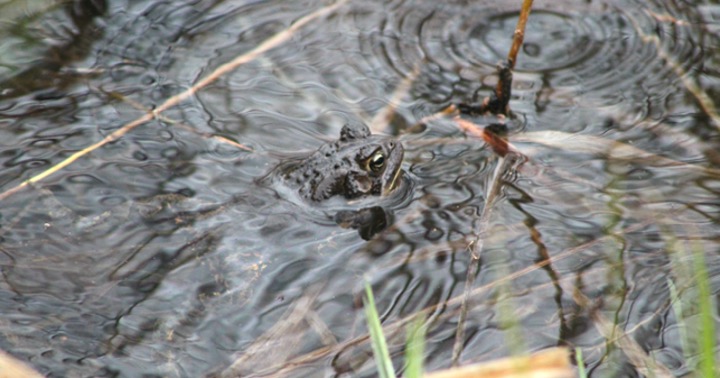
One of the things that I look forward to most in spring is the calling of the frogs. Their sounds remind me that the days are getting longer and warmer, and they invite me to come exploring in the woods. Mating season for frogs in the Northern Hemisphere typically takes place from early spring to summer depending on the species.
Here in Mid-Michigan, the Western Chorus frogs, Spring Peepers, and Wood Frogs are the first to call. Then the Eastern American Toads, followed by the Green Frogs, Eastern Gray Tree Frogs, and Bull Frogs. So this time of year is the perfect opportunity to see animals using vibrations to help them make sounds.
But before we get more into that, let's talk about frogs vs toad characteristics real quick. Frogs and toads have some unique characteristics that help you tell them apart.
Typically frogs have very mucousy, moist skin and long legs for jumping, whereas toads often have drier skin and shorter legs for walking. But technically speaking, toads are a subgroup of frogs and they resemble each other in many ways, including having vocal sacs that they fill with air and then release slowly, and that vocal sac vibrates and creates the unique call of each species. Male frogs and toads call in the spring to attract females to the vernal pools that they're using for mating.
Again, these temporary ponds are a great location for certain amphibians to lay their eggs because there aren't big predators like fish to eat the developing young. To help give your learners a visual of vocal sacs, because it's kind of a weird thing to talk about, check out some videos of different frog and toad species calling in spring. If you don't want to have to search through videos on YouTube, visit the show notes for my podcast episode number 47: 6 Vernal Pools and Frog Activities Aligned with K-5 NGSS, where I have links for wood frogs, western chorus frogs, and toads calling in spring.
Now, to help illustrate how vibrations make sound, tuning forks are a great first demonstration. However, not every program or homeschool home has tuning forks, and they aren't the cheapest thing to acquire. Balloons, on the other hand, are much easier to come by and won't break the bank.
I suggest getting your hands on some balloons and some shallow pans for water. Think aluminum pie tins. Show your learners that they're going to partially submerge their balloons in water.
Someone will gently hold the balloon in the water, and then other learners will take turns gently rubbing the balloon. This will make a squeaky noise, but it will also show waves in the water. This represents the vocal sacs of the frogs and toads in spring, an external structure that aids in mating and overall species survival.
If you don't mind the squealing of balloons being inflated and deflated, as an alternative, you could provide each learner a balloon that they're responsible to keep track of, and they could inflate their balloon, hold the end, stick the inflated portion in the water, and then slowly release the air from the balloon. This would require more balloons as everyone would need their own, and it would also create a lot more noise than your first option that I talked about. This way of demonstrating how air being released makes the vibrations and noise is more accurate to how frogs and toads make noise, but the other option would work just as well.
It's really up to you on how much craziness you'd like to endure, as well as the return of the used materials. This would be a more challenging method because they don't want to give up the balloon they've been blowing into and making noise with. So after showing them how to do this demonstration, break your learners up into smaller groups and provide each group with an already inflated balloon and a shallow pan of water, or alternatively, a balloon for each learner, depending on which method you'd like to use.
Have them take turns making noises and sound waves in the water and have a discussion on what they're noticing. Hopefully, they'll notice that the rubbing balloon makes a noise, but also that the balloon makes waves in the water when the sound is being made. This can lead to you and your learners discussing how vibrations make sound.
If you haven't watched videos of frogs and toads calling yet, after the demonstration would be a great time so that you can relate the balloon to the vocal sacs of the animals, and your first graders can focus on how the vibrations make noise and your fourth graders can focus on the external structures that help the animal's reproduction be successful.
[11:48]
For second grade, the Next Generation Science Standard that I pulled was 2-LS4-1: Make observations of plants and animals to compare the diversity of life and different habitats. Then the fifth grade standard was 5-ESS3-1: Obtain and combine information about ways individual communities use science ideas to protect the earth's resources and environment.
For second and fifth grade, I'm going to suggest doing a frog vs toad and other herps Bioblitz in different ecosystems or habitats. If you've never heard of a Bioblitz before, it's defined as a fast-paced community-driven event where scientists, volunteers, and nature enthusiasts work together to identify as many species of plants, animals, and fungi as possible within a designated area and time period, typically 24 hours.
And since you likely don't have scientists or other volunteers or 24 straight hours, we're going to modify this definition a little bit for this activity. So what I'll suggest for you and your learners is that you pick a Friday afternoon or the last day of the week and spend the last two to three hours running your Bioblitz, depending on how much green space you have to survey, that will adjust how much time you spend. If you hype it up right, your kids will look forward to this and will come with a lot of energy.
That being said, your future self will be so grateful that you had the forethought to put this activity at the end of the day, at the end of the week. Once you've picked your day, you'll want to help your learners be as successful as possible, meaning you're going to want to split into more than just one group so that the groups are smaller. So to do this in a classroom setting, you'll want to ask for caregiver volunteers that can move with smaller groups of learners in your school's green space.
If you're a homeschool parent, you already have a small group and will likely be able to do this solo. If you're a homeschool co-op coordinator, you'll want to make sure that caregivers stick around for this activity so that you can have smaller groups of learners. Then you'll want to decide which different ecosystems or habitats that you'll survey.
If you're thinking to yourself, well, jeez, Victoria, I don't have different ecosystems, let's stop and talk about what that could mean. Different ecosystems that you may have could include grassy areas. You could have edges that include shrubs and tall grasses between your school's property and the adjacent one.
You could have pavement, which may not seem like a place you'd find frogs and toads and salamanders and lizards, but they like to visit pavement in spring when it feels warm to the touch. You may have flower beds around your school. You can reimagine what an ecosystem is.
It's not just forest ponds and flower-filled meadows. However, if you do have these ecosystems at your disposal, definitely give yourself lots of time to conduct your Bioblitz survey because you have a lot more area to cover. Next, you'll want to make sure you're continuing to set your learners up for success by having different identification options for them.
Do you have field guides that you could send with each group? Do you have iPads that they could take pictures and possibly use the Seek app? Do you have quick ID cards that you could provide each group?
Helping your students have supports to identify what they're finding will help them develop their research skills while also supporting their ability to collect data. Then you'll have to determine how you'd like to collect the Bioblitz data. Do you want to provide an anchor chart paper with a table on it that the kids return to to add their observations?
Do you want them to post their observations to iNaturalist? Do you want them to record their observations on a group sheet and then report back at the end of the time? This part is really up to your preference and discretion.
Each method has pros and cons. Once you've decided on the logistics, share them with your learners. These rules and regulations will help them do their best to locate and record frogs vs toads vs other reptiles and amphibians on your BioBlitz day. This activity will help your second graders see real live place-based data about different populations of different kinds of animals in different ecosystems.
It could also contribute to the fifth grade standard of using science ideas to protect the Earth's resources environment if you, the educator, take their data and submit it to the citizen science projects Michigan Herp Atlas or iNaturalist. Scientists use the data collected within these projects to learn about the populations of amphibians and that data can help inform pollution policies and other important stewardship-related movements. This is because many amphibians are sensitive due to their moist skin and they're known as indicator species.
When they're missing from an area they should be present, it's likely that the space is polluted and needs to be reevaluated. I personally know, even as an adult, I get super geeked about the prospects of a Bioblitz, and if it were a Bioblitz focused on reptiles and amphibians, I would be over the moon, so your second and fifth graders are probably going to be super jazzed about this activity.
[16:30]
In a nutshell, today we talked about frogs vs toads and other herps in spring activities for kindergarten through fifth grade Next Generation Science Standards. For kindergarten and third grade, we talked about a salamander migration activity. For first and fourth grade, we talked about a vocal sac investigation with balloons. For second and fifth grade, we talked about an amphibian and reptile-focused Bioblitz in different ecosystems.
If you're super pumped about investigating frogs and you're looking for more resources, check out my Frog Life Cycle and Grouping Mini Unit for 3rd Grade, my article “Frogs and Toads Together: Why do Amphibians Group Up?”, and my Frog Life Cycle Coloring Page. Thanks so much for taking time to listen today. I know you're busy and I truly appreciate the time you take to tune in.
If you have any questions, wonderings, or frogs vs toads activities that you use, get a hold of me on Instagram at naturally.teaching, or you can email me at victoria@naturallyteaching.com. And don't forget to check out the show notes for this episode and naturallyteaching.com/episode63 for all the links that I've mentioned. And if you've made it all the way to the end, thanks for sticking with me.
I know this is a little longer than normal, but I wanted to make sure we covered all the grades since we only had one episode. So thanks again for joining me today. And until next time, keep exploring, keep learning, and keep naturally teaching.
Thank you so much for tuning in to today's episode of the Naturally Teaching Elementary Podcast. I hope you found it informative, inspiring, and full of actionable insights to enhance your teaching journey. Connect with me on social media for more updates, science tidbits, and additional resources.
You can find me on Instagram and Facebook at naturally.teaching. Let's continue the conversation and share our passion for teaching elementary-aged children together. Don't forget to visit my website at naturallyteaching.com for all the show notes from today's episode.
If you enjoyed today's episode, please consider leaving a review on your favorite podcast platform. Your feedback helps me improve and reach more educators like you. Thank you again for listening, and until next time, keep exploring, keep learning, and keep naturally teaching.

0