![Exploring Invertebrates: 10 Picture Books to Introduce Animal Characteristics [ep. 9]](https://www.naturallyteaching.com/wp-content/uploads/2024/07/exploring-invertebrates-books-header-300x200.png)

Science
Frogs and Toads Together: Why do Amphibians Group Up?April 11, 2025

An elementary teacher science blog
Affiliate disclosure: As an Amazon Associate, I may earn commissions from qualifying purchases from Amazon.com. This is at no extra cost to you. If you’d like to learn more, check out my disclaimers page.
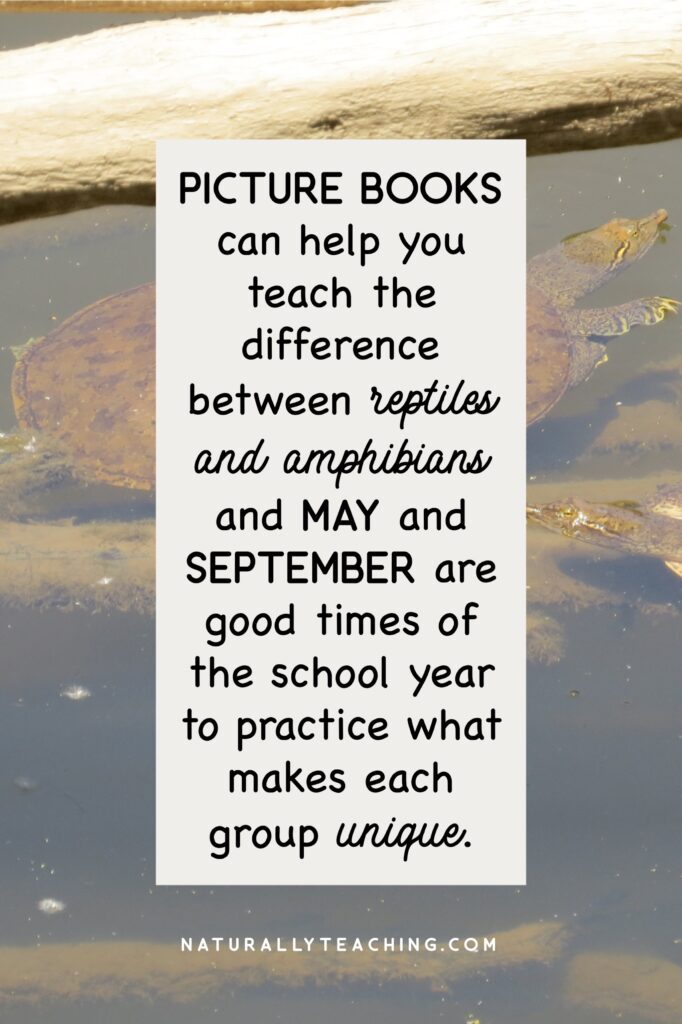
May is a magical month where learners can see ALL.THE.ANIMALS again! They’re either waking up from their winter sleep or they’re making their way back from their migration journey; either way, your kiddos have the opportunity to see animals of all kinds for a brief time before the end of school including amphibians and reptiles. Help your learners differentiate between the two with picture books.
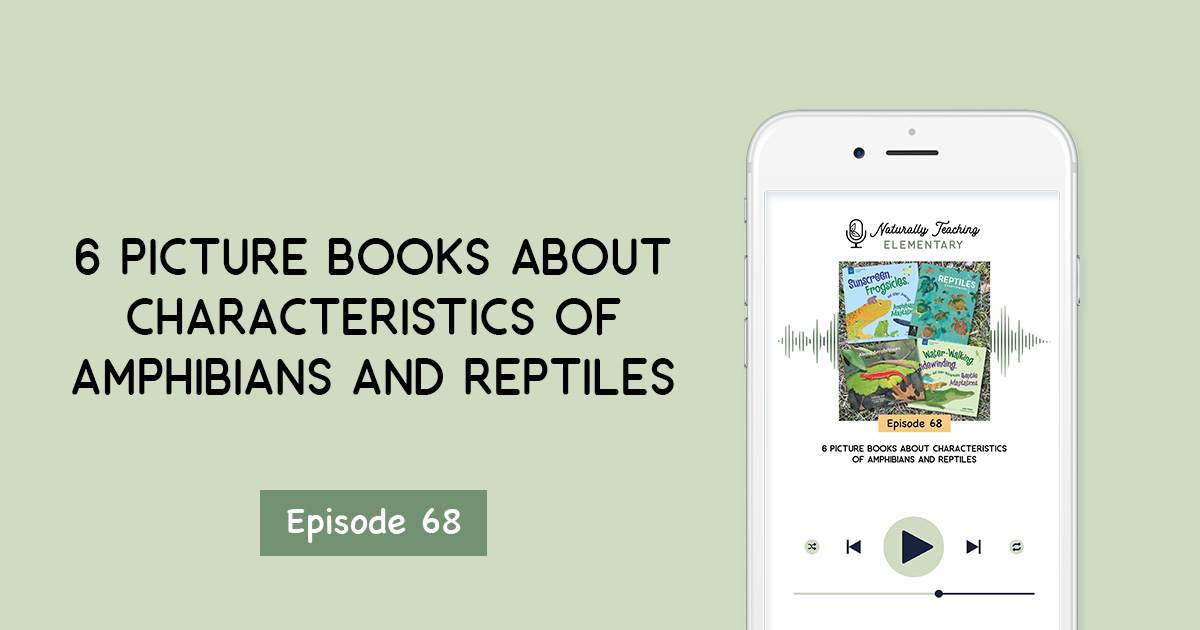
In this episode, I share 6 books about characteristics of amphibians and reptiles. Listen in to discover some amazing picture books about amphibians, reptiles, and their unique adaptations!
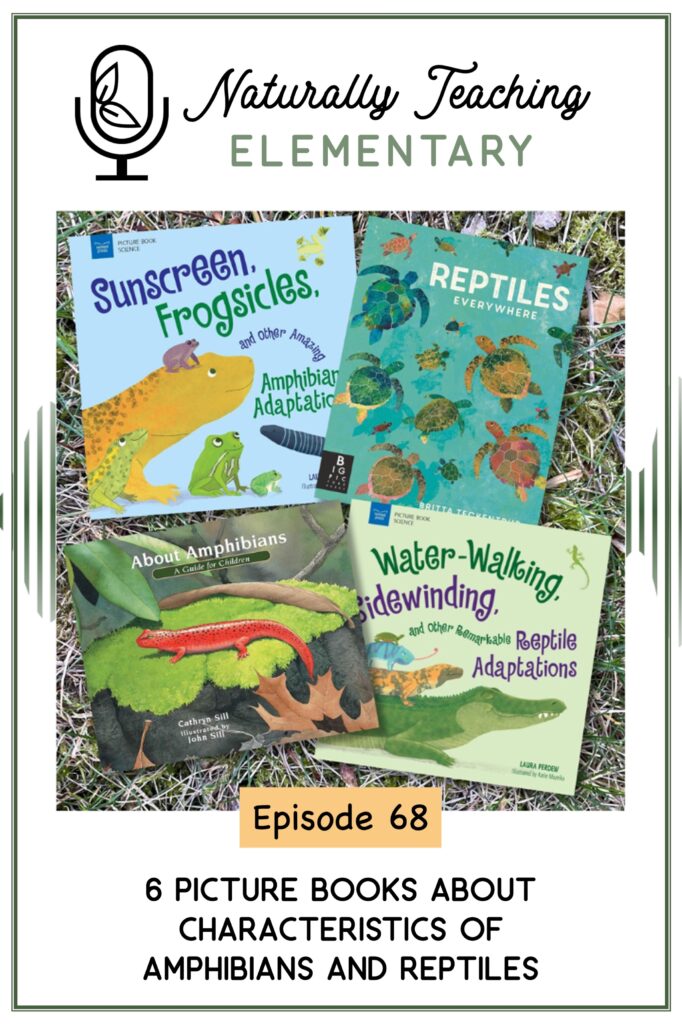
Books about characteristics of amphibians and reptiles covered in this episode include:
Want to view all of these in one place? Check them out here!
Extra books about characteristics of amphibians and reptiles covered in this episode include:
Affiliate Disclosure
I only endorse things that I’ve personally used, come highly recommended by trusted peers, or I’ve done extensive research on. As an Amazon Associate, I may earn commissions from qualifying purchases from Amazon.com. This is at no extra cost to you, the commission is covered by the company.
I am recommending products that I think will be genuinely helpful and useful, and not because of the small commissions that I receive. Please only purchase items if you believe that they will help you achieve your educational goals. If you’d like to learn more, check out my disclaimers page.
[0:00]
Teaching elementary-aged children is a rewarding experience, but as educators and parents, finding the time and resources to create engaging lessons can be a challenge. That's where this podcast comes in. Welcome to Naturally Teaching Elementary.
I'm Victoria Zablocki, a certified elementary teacher turned outdoor educator. With over a decade of experience coaching teachers on effective teaching methods, I'm passionate about teaching the whole child with authentic and place-based experiences in school and home settings. Join me as we explore strategies for teaching with practical teaching tips, insightful interviews, picture book reviews, and more.
So let's grow together. All right, everybody, welcome back to the Naturally Teaching Elementary podcast. My name is Victoria Zablocki and I'm your host.
So it's officially May and with that comes all the animals. Your learners finally have the opportunity to see reptiles and amphibians again this school year, but only for a short time before school is out. So I'm going to spend the month of May talking about characteristics of amphibians and reptiles and how you can help your learners differentiate between these often confused critters.
And what better way to introduce these differences than with picture books? To help you, the teacher or homeschool parent, get inspired, I put together a list of six books about characteristics of amphibians and reptiles that provide you pictures and text to keep it all straight. And if you've listened to my other episodes about picture books, I'm sure that you've caught on to the fact that I'm very passionate about teaching science concepts with the help of children's literature.
And for good reason. Research has shown that integrating science and literacy has many benefits, including saving teachers time in their schedule, improved attitudes of children towards science, better overall performance in reading and science, and so many more. For more information about benefits and methods for integrating science and literacy, check out my blog post, “Teaching with Books: How to Integrate Science and Literacy for Elementary Classrooms.” So let's get into these books.
[1:56]
Book number one is About Amphibians by Cathryn Sill, illustrated by John Sill. This book is a simplistic take on the characteristics of amphibians. Sill shares that amphibians have soft, moist skin, most of them spend part of their lives in water and part on land, they hatch from eggs laid in water or wet places, they change as they grow, some have tails and some don't, they experience metamorphosis, some are camouflaged, some have poison glands in their skin, they bury themselves and sleep through extreme weather, some call to each other, and most eat insects and some eat small animals.
This book ends with some additional natural history information about the different kinds of amphibians pictured in the book. So this is a very straightforward look at different characteristics of amphibians. It uses simple language to share the specialized body coverings of amphibians, where they live, where they lay their eggs, the fact that they experience metamorphosis, and how they handle adversity in nature. The illustrations are lovely, realistic, and show a variety of species of frogs, toads, and salamanders. They're also labeled so you know which species is pictured. This would be a great option for your early childhood learners. Say preschool through second or third grade would be my suggestion.
[3:07]
Book number two is There Are Amphibians Everywhere by Camilla de la Bedoyere, illustrated by Britta Teckentrup. This book is a much more in-depth exploration of characteristics of amphibians. It begins with a breakdown of the main characteristics of amphibians, including the fact that they're vertebrates, meaning they have backbones.
They need water, so you can find them near bodies of water. And the three main groups of amphibians are frogs and toads, salamanders, and caecilians. The author breaks things down further by sharing the similarities and differences between the three different groups.
Frogs and toads don't have tails. Their hind legs are longer than their front legs. And frogs usually have smooth skin, while toads have bumpy skin. Salamanders have slender bodies, long tails, and short limbs. And caecilians have long bodies and no limbs.
The author then goes on to share the history of amphibians, where they can be found, information about their specialized skin, the fact that they're cold-blooded, how they breathe, and more.
This book is chocked full of great information and has lovely vibrant illustrations. It shares the amazing diversity of amphibians from around the world and celebrates their uniqueness in an engaging way. With the amount of information in this book and heavy use of scientific language, I would suggest it for upper-elementary learners, probably 3rd through 5th grade.
I would also make sure to have a conversation with your learners about anything they think is suspect, or if they need clarification. As an example, when the author describes salamanders, they say, “These lizard-like amphibians”. This could fuel some naïve conceptions that salamanders and lizards are similar or the same, since they're being used to describe the other. Although this is a small point, it could be confusing for learners, and we're trying to make it very clear that reptiles and amphibians are not the same.
[4:46]
Book number three is Sunscreen, Frogsicles, and Other Amazing Amphibian Adaptations by Laura Perdew, illustrated by Katie Mazeika. This is a fun book about adaptations that are unique to specialized amphibian species.
The book begins with monkey tree frogs producing a waxy substance compared to sunscreen that locks in the moisture in their skin so they don't dry out. Then it moves to Alaskan wood frogs and how they turn into frogsicles in the winter and thaw out in the spring. Then they share the water holding frogs bury themselves in very dry conditions, shed their skin and sleep in it like a cocoon.
And the list of incredible adaptations goes on. This book is a fun way to explore the characteristics of amphibians through their very unique adaptations. Although the book doesn't provide a list of amphibian characteristics, your learners can surmise that they have moist skin if there's a frog that puts a waxy coating on its body so that it doesn't dry out, or that amphibians need warm temperatures for their bodies to work if there's a frog that ends up freezing solid in the winter and their heart stops beating.
What an engaging way to teach your learners all about amazing amphibians. As if this book wasn't cool enough, there's also a description for a related activity in the back as well.
[5:51]
Book number four is About Reptiles by Cathryn Sill, illustrated by John Sill. This book, just like the amphibian one, is a simplistic take on the characteristics of reptiles. Sill shares that reptiles have dry scaly skin, some have a hard bony plate, they have short legs or no legs, they move by crawling or by swimming, they need warm temperatures, they sleep in cold winter weather, most are meat eaters and some eat meat and plants, some use venom to capture their prey, they hatch from eggs, some carry their eggs in their body until they're ready to hatch, and young reptiles care for themselves after they hatch. The book ends with some additional natural history information about the different kinds of reptiles pictured in the book.
Just like About Amphibians, this book is a straightforward look at different characteristics of reptiles. They use a simple language to share the specialized body covering of reptiles, where they live, where they lay their eggs, the fact that they don't experience metamorphosis, and how they capture their food. The illustrations are lovely, realistic, and show a variety of species of snakes, lizards, turtles, and tortoises.
These illustrations are also labeled with the species names so that your learners can become more acquainted with real reptiles. Also, this book would be a great option for early childhood learners, say preschool through second or third grade, just like the other one. And if you like the sounds of this book, the Sills have more books about animal characteristics, including About Mammals, About Birds, About Fish, About Insects, About Arachnids, About Mollusks, and About Crustaceans.
And I talk more about these books in my podcast episode number nine, “Exploring Invertebrates: 10 Picture Books to Introduce Animal Characteristics”.
[7:23]
Book number five is Reptiles Everywhere by Camilla de la Bedoyere, illustrated by Britta Teckentrup. This book is much more in-depth exploration of characteristics of reptiles. It begins with descriptions of different kinds of reptiles, including turtles and tortoises, crocodilians, lizards, and snakes. Within these descriptions, the author also shares characteristics of reptiles, including the fact that reptiles breathe with lungs, they're cold-blooded, they have scaly skin, and many have legs. They also share the similarities and differences between the different groups of reptiles.
Turtles and tortoises have beaks, shells and scutes. Crocodilians have long bodies, powerful jaws and bony scales. Lizards have legs, a tail, are speedy movers, and have sharp claws. And snakes have special scales, strong muscles, and they slither and slide. The author then goes on to share the history of reptiles, how they're related to dinosaurs, where they can be found, and more. Again, this book is chocked full of great information.
It has lovely, vibrant illustrations. It shares the amazing diversity of reptiles from around the world and celebrates their uniqueness in an engaging way. Just like There Are Amphibians Everywhere. With the amount of information in this book and heavy use of scientific language, I would suggest it for upper elementary learners, probably third through fifth grade again.
I would also make sure to have a conversation with your learners about the fact that science is ever changing, as more information is uncovered every day. There are current scientific theories that birds may actually be more closely related to dinosaurs than our modern-day reptiles. So even though this book has good points that they resemble each other and have similar adaptations, it's always good to keep an open mind to new evidence and to also be aware that scientists can change their thinking when presented with more information.
If you like the sounds of this book, Bedoyere has a variety of books about animal groups and their characteristics, including Mammals Everywhere, Fish Everywhere, and Bugs Everywhere.
[9:09]
Book number six is Waterwalking, Sidewinding, and Other Remarkable Reptiles Adaptations by Laura Perdew, illustrated by Katie Mazeika. This is a fun book about adaptations that are unique to specialized reptile species. The book includes a description of how the green basilisk lizard is able to run on water. It also includes a description of a snake that can move sideways and how that can benefit them in nature. The author also hits on the amazingly long tongues of chameleons and how they use them to catch their food. And the list of incredible adaptations goes on.
This book is a fun way to explore how reptiles meet their needs through their very unique adaptations. Although the book doesn't provide an explicit list of what reptiles need to survive, your learners can surmise that they eat animals because chameleons use their long tongues to hunt insects or some reptiles live near water. Otherwise, why would the green basilisk lizard evolve to be able to run on water? It's an amazing hook to get your learners invested.
Plus, just like the one about amphibians, there's a related activity in the book for you to do with your learners. You can also download the description from the publisher's website if that's easier. If you love the sound of these books, there are more for other animals and their cool adaptations, including Stink Fights, Earwax, and Other Marvelous Mammal Adaptations; Spit Nests, Puke Power, and Other Brilliant Bird Adaptations; Antifreeze, Leaf Costumes, and Other Fabulous Fish Adaptations.
[10:29]
So in a nutshell, today we talked about six books about characteristics of amphibians and reptiles for elementary age students. Titles that were summarized include About Amphibians by Cathryn Sill, illustrated by John Sill. There are Amphibians Everywhere by Camilla de la Bedoyere,, illustrated by Britta Teckentrup. Sunscreen, Frogsicles, and Other Amazing Amphibian Adaptations by Laura Perdew, illustrated by Katie Mazeika.
About Reptiles by Cathryn Sill, illustrated by John Sill. Reptiles Everywhere by Camilla de la Bedoyere, illustrated by Britta Teckentrup, and Water Walking, Sidewinding, and Other Remarkable Reptiles Adaptations by Laura Perdew, illustrated by Katie Mazeika. If you're looking for more books about animal characteristics, check out my podcast episode number nine, Exploring Invertebrates: 10 Picture Books to Introduce Animal Characteristics on naturallyteaching.com or follow the link in the show notes.
If you're looking for more background on animal characteristics, check out my podcast episode number seven, Animal Characteristic Breakdown: Reaching Your Curricular Goals by Teaching with Animals. So thanks for taking time to listen today. I know you're busy and I truly appreciate the time you take to tune in.
If you have any questions, wonderings or books about characteristics of amphibians and reptiles that you use, get a hold of me on Instagram at naturally.teaching or you can email me at victoria@naturallyteaching.com. And don't forget to check out the show notes for this episode at naturallyteaching.com/episode68. Thanks again for joining me today and until next time, keep exploring, keep learning, and keep naturally teaching.
Thank you so much for tuning in to today's episode of the Naturally Teaching Elementary Podcast. I hope you found it informative, inspiring, and full of actionable insights to enhance your teaching journey. Connect with me on social media for more updates, science tidbits, and additional resources.
You can find me on Instagram and Facebook at naturally.teaching. Let's continue the conversation and share our passion for teaching elementary-aged children together. Don't forget to visit my website at naturallyteaching.com for all the show notes from today's episode.
If you enjoyed today's episode, please consider leaving a review on your favorite podcast platform. Your feedback helps me improve and reach more educators like you. Thank you again for listening, and until next time, keep exploring, keep learning, and keep naturally teaching.

0