![Exploring Invertebrates: 10 Picture Books to Introduce Animal Characteristics [ep. 9]](https://www.naturallyteaching.com/wp-content/uploads/2024/07/exploring-invertebrates-books-header-300x200.png)
Science
Frogs and Toads Together: Why do Amphibians Group Up?April 11, 2025

An elementary teacher science blog
Summer is the time that butterflies shine! It’s when they can be found as eggs, caterpillars, chrysalides, and adults. It also happens to be when many of us don’t have learners to enjoy them… but that’s ok! We’re going to talk today about activities to investigate butterflies with orange and other adaptations, but you’re going to come back to this episode when you’ve got your learners back and you’re ready to use these activities.
In this episode, we’ll talk about activities to investigate butterflies with orange and other adaptations for kindergarteners and 3rd graders. I’ll share the standard that inspired the activity, how they relate to butterflies with orange and other adaptations for kindergarteners and 3rd graders, and descriptions of how to use the activity with your learners.
In this episode, I discuss the following standards connected to butterflies with orange and other adaptations:
[0:00]
Teaching elementary-aged children is a rewarding experience, but as educators and parents, finding the time and resources to create engaging lessons can be a challenge.
That's where this podcast comes in. Welcome to Naturally Teaching Elementary. I'm Victoria Zablocki, a certified elementary teacher turned outdoor educator.
With over a decade of experience coaching teachers on effective teaching methods, I'm passionate about teaching the whole child with authentic and place-based experiences in school and home settings.
Join me as we explore strategies for teaching with practical teaching tips, insightful interviews, picture book reviews, and more. So let's grow together.
Hey everybody, welcome back to the Naturally Teaching Elementary podcast. My name is Victoria Zablocki and I'm your host. So last week in episode 77, I shared six butterfly books to help you introduce butterfly characteristics, adaptations, and life cycles.
This week, I'm excited to bring you the beginning of the butterfly activities I'll be sharing this month, starting with butterfly needs and heredity.
And although we're talking about butterflies and butterfly activities in July, when you likely don't have kids to teach, I decided to do this now partially to promote the North American Butterfly Count that's happening this month, but also partially because you can get fantastic pictures of butterflies now as the educator that you could end up using during the school year when you do study butterflies.
Summer is really when butterflies shine, so highlighting them now can get you inspired for the school year. So listen now and come back later in the school year to remind yourself of the activity you'd like to include in your studies.
So in this episode, I'm going to describe activities for grades kindergarten and third that are about butterflies with orange and other adaptations. For each activity, I'll share the Next Generation Science Standard that inspired that activity, as well as the scientific phenomenon that that activity helps explain.
And make sure that you listen through to the end of the episode because even though I've compared these activities to particular standards, you may find yourself inspired to use a similar concept for your curriculum or even the same activity for a different grade. Also, if you're new to taking your students outside for learning, check out episode 6: 5 Outdoor Education Safety Tips for Teaching Outside for suggestions to make teaching outside easier. Now let's get into these activities about butterflies with orange and other adaptations.
[2:15]
So for kindergarten, the Next Generation Science Standard that I pulled was K-ESS3-1: Use a model to represent the relationship between the needs of different plants and animals, including humans, and the places they live.
Something that's unique to butterflies is that many of them have host plants. Real quick, host plants are very specific plants that adult butterflies seek out to lay their eggs. When the eggs hatch, the caterpillars eat the plant that they're laid on. Even though adult butterflies can eat nectar from a variety of flowers, caterpillars are specialized and can only eat the leaves of their host plant.
So for kindergarten, I'm going to suggest talking about the relationship of butterflies and host plants in regards to animals getting what they need from the places they live.
You can do this with any type of butterfly that has a host plant from your area and truthfully, the most impactful example would be a host plant that is in your school property or in your backyard.
Children often connect best to something that has an effect on them, and if the host plant is present at a location they can visit, they're more likely to take interest and to be engaged with the information.
One of the most notable butterflies with a specific host plant is one of the butterflies with orange, the monarch butterfly. Their host plant comes from the milkweed family, including common milkweed, swamp milkweed, and butterflyweed.
And yet another benefit to this butterfly is that common milkweed can be found in the Midwest, but swamp milkweed, and especially butterflyweed, covers most of the continental United States, minus the northwest part of the country. This makes this specific species accessible to many of us.
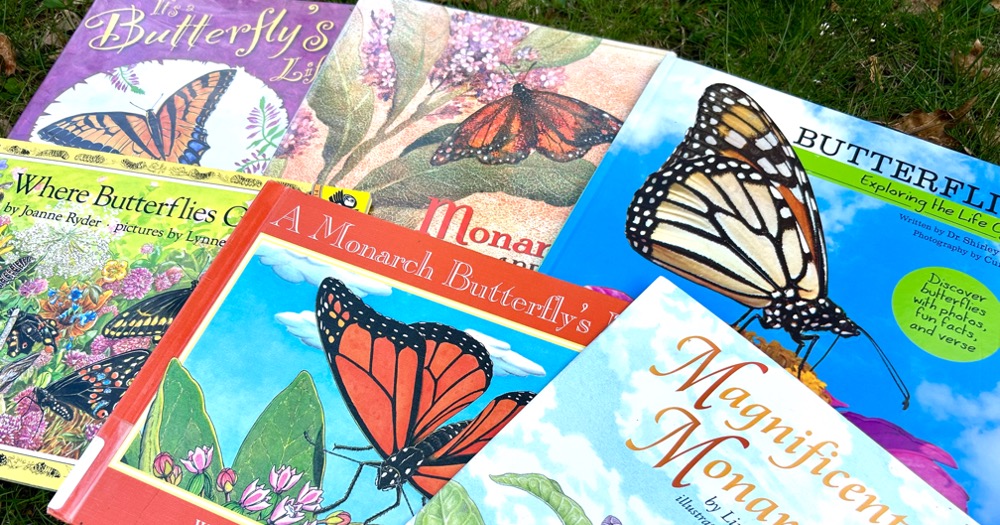
Plus, there are a lot of picture books about monarch butterflies that you can use to introduce them and their host plants to your early childhood learners.
To help you find quality picture books, check out my article, “How Butterflies Grow: 8 Picture Books About Butterfly Life Cycles”, that includes four titles specifically about monarchs. One is even titled Monarch and Milkweed, a direct connection to a butterfly and their host plant.
After introducing your selected butterfly and their host plant, again, preferably one your learners can visit, spend time investigating the plant in your space. Go outside and look to see if the leaves are chewed on, or if there are caterpillars or pupa on your plant. If you're doing this in the fall, you likely won't see caterpillars, but you may see the evidence that suggests they were there earlier that year.
You may come across a chrysalis on or near the host plant, but again, you may come across an empty pupa suggesting that the butterfly emerged and flew away. If you do this in the spring, you may end up with eggs, possibly very fresh caterpillars. It's not likely you'll be able to see an entire life cycle outside.
With that note, there are a lot of people that purchase the butterfly raising kits to use in their classroom, and I understand the appeal and the chance for your learners to see the entire life cycle before their eyes, but there are some risks to the local environment if you choose to raise and release the butterflies.
I would suggest that if you get these kits, you raise them and then keep them until they die. If you want more details, check out my article, “A Raising Butterflies Kit for the Classroom: A Conservation Conversation”, where I interview two naturalists about the possible negative environmental impacts of releasing these butterflies.
Okay, back to the activity. If you chose the monarch butterfly and milkweed to highlight for this activity, you get to introduce the extra benefit of the milkweed plant to the species -it makes monarchs toxic.
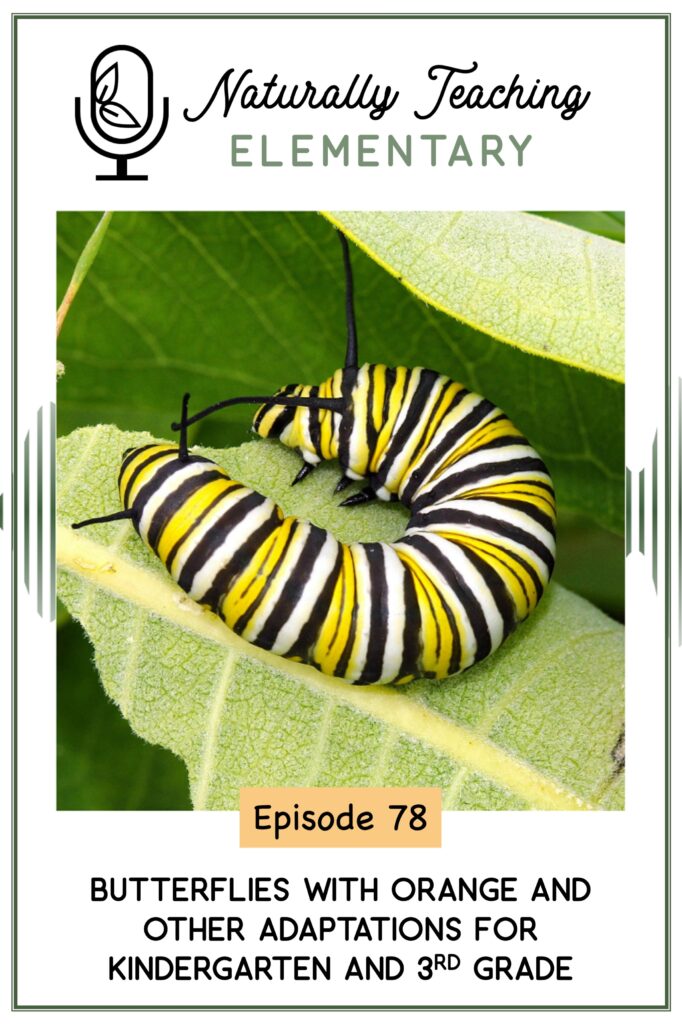
The milky sap that the caterpillars ingest when eating the leaves builds levels of toxins and neurotoxins inside the caterpillar's body, and if an animal eats a monarch caterpillar, they get sick. And once an animal eats one, they learn to stay clear of them, helping protect the rest of the species.
This is a very special benefit for the species as a whole, and shows that a host plant can play more than just one role in some butterflies' lives. First and foremost, they're the food for the larval stage, but sometimes they provide a secondary benefit, such as toxicity.
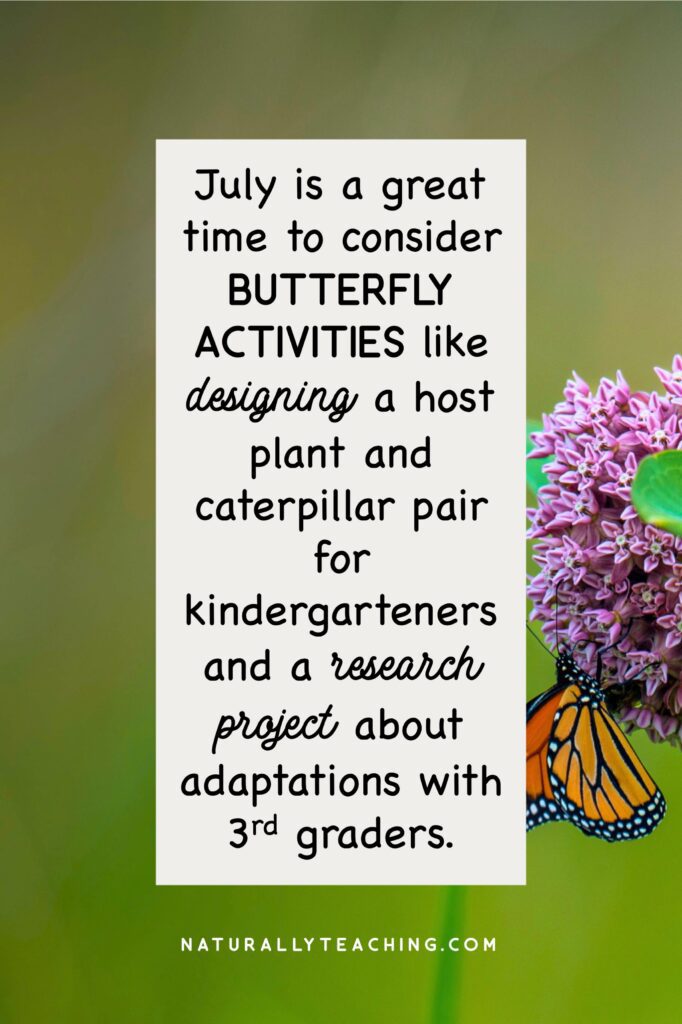
After going outside and looking closely at the host plant in your space, give your learners the chance to design their own host plant and caterpillar pairing. They can take inspiration from the plant and caterpillar that you introduced, or they can take inspiration from a different plant in your space and design a brand new caterpillar that feeds off the plant.
This exercise is a great way to see how much they learned about caterpillars getting what they need from their microenvironment of a host plant, but also it's an exercise in creativity and gives some of your learners who have a harder time with regular assessment an opportunity to shine.
[6:41]
For third grade, the Next Generation Science Standard that I pulled was 3-LS3-1: Analyze and interpret data to provide evidence that plants and animals have traits inherited from parents and that variation of these traits exists in a group of similar organisms.
So even though butterflies are great to help teach complete metamorphosis and third graders in Next Generation Science Standards learn about life cycles, I'm going to go a different direction with my idea today.
I'm going to focus on the traits inherited from parents that help butterflies survive, and that is thanks to many of them having very specialized ways of staying alive.
To start off, I'm going to give you a little natural history about some of the ways that butterflies have evolved to stay safe from predation. A lot of it has to do with coloration and patterns.
Some of the fancy scientific terms for ways that appearance can help butterflies survive include aposematic coloration, mimicry, deimatic patterns, camouflage, and dimorphism.
And we actually all know what aposematic coloration is, we just may not have known the name for it. Aposematic coloration is when toxic animals give a warning with their colors.
In the butterfly world, a great example of this would be butterflies with orange, most notably the monarch butterfly. Monarch caterpillars, as we talked about before, eat milkweed plants, which have toxins, that are then stored in the caterpillar and transferred to the adult after they change in the pupa stage. Some other colors that predators have found to stay clear of in the butterfly world would include red, yellow, and white.
Mimicry is another way that butterflies keep themselves safe, and you probably already knew about this one as well, but you may not have known about the name either. Mimicry is when a butterfly looks like another butterfly that happens to be toxic, but they're not toxic themselves.
Going back to butterflies with orange, the viceroy looks very similar to a monarch butterfly with just a few small differences. This makes predators believe that a viceroy will make them sick if they eat them, just like when they eat a monarch. Some other butterflies with orange that mimic the monarch include the queen butterfly and soldier butterfly.
Moving on to deimatic patterns, some butterflies have striking shapes on their wings, including circles that look like eyes. These eye-shaped patterns surprise and scare predators long enough for the butterfly to escape. This strategy can be found on caterpillars as well as butterflies.
Camouflage is probably the most well-known strategy for butterflies staying safe with their appearance. Pretty much everyone knows that camouflage means animals blend into their surroundings.
But did you know that some butterflies combine deimatic patterns and camouflage? Some butterflies have circles and bright colors on the tops of their wings, but leaf-like colors and patterns on the bottoms of their wings. When they land to rest, they can open their wings to use the deimatic patterns to scare off a predator, or they can close their wings to disappear.
The last strategy that I brought up was dimorphism. This is when the male and female of a species look different. This often means that the male is brightly colored while the female is more camouflage colored.
The benefit to this trait is that the males can signal that they have good genetics for healthier offspring and their bright colors attract the female's attention, while the females can avoid predation better while they look for a place to lay their eggs.
So my suggestion for 3rd grade is to investigate these types of survival strategies further with your 3rd graders. A lot of animals use these traits, so you don't have to focus on butterflies, but it's very evident and prevalent in butterflies as a group.
All of them use at least one, sometimes two of these strategies to survive and procreate. This sort of topic can lend itself well to subject integration too.
You could have your learners discover these strategies through research, and then they could write a report or a poster to share their findings. This would include reading, writing, and art into your science experience.
Additionally, you could have your learners share their findings orally as well. There are several different ways you could go about diving deeper into survival strategies.
You could have each of your learners select a local species of butterfly that could be found near you. This would provide them a place-based opportunity to explore your local butterflies and subsequently local plant species, as the host plant may contribute to toxicity in their species.
Another way you could start this project would be to have your learners get into groups of four, select a species, and then have each of them specialize in one of the life stages of the selected species so that they could find survival strategies that cross the life of the butterfly, not just in the adult.
After determining how you want to start, then you'll need to decide how you want them to find the information.
Are you going to provide them field guides, library books, the internet, or a specialist to talk to? Once you've narrowed down their authority resources, you'll have to decide how you want them to interact with this information.
Do you want them to format a report? Would you like them to create a digital presentation? Do you want them to make their own field guide page? Would you prefer them to make a poster? Or do you want to give them all the options and let them choose?
Lastly, you'll have to decide if you'd like this information shared. Many scientists make their findings public through publications and presentations. Would you like your budding scientists to present to their classmates or to parents at an expo?
Would you prefer to take one interesting fact from each child and make it an interactive game that you share with families? Would you like to have their posters posted in the hallway or the library?
Having a final goal that includes sharing with others can inspire learners to take their time and develop a well-thought-out final product and can help them celebrate their work.
And if you love the sounds of this activity but you're not sure where to start, feel free to pop over to my Teachers Pay Teachers store to check out my Butterfly Life Cycle and Heredity Mini Unit for 3rd grade. It includes a recording sheet that focuses on these five survival strategies with an accompanying article on my website NaturallyTeaching.
You could also just visit that same article, “What Butterfly Look Like A Monarch and Four Other Butterfly Survival Strategies as a starting point for your learners with their research. And I'll make sure to put links for both of those in the show notes.
[12:30]
So in a nutshell, today we talked about activities for kindergartners and 3rd graders that were about butterflies with orange and other adaptations. For kindergarten we talked about designing a host plant and caterpillar pair, and for 3rd grade we talked about a research project that focuses on appearance strategies that help butterflies survive.
And don't forget, if you're looking for a made-for-you research starting point for butterfly survival adaptations, check out my Butterfly Life Cycle and Heredity Mini Unit for 3rd grade.
It includes that recording sheet, as well as answering key questions from a butterfly book, identifying science vocabulary from a butterfly book, an informative writing about the role of host plants, a modeling opportunity of the life cycle, a science reasoning page for looking closer at butterfly life stages, a butterfly ID recording sheet, a data recording sheet for a butterfly life stage survey, an opportunity for your learners to design their own butterfly life cycle, and teacher answer sheets.
So thanks for taking time to listen today. I know you're busy and I truly appreciate the time you take to tune in. If you have any questions, wonderings, or activities to study butterflies with orange and other adaptations that you use, get a hold of me on Instagram at naturally.teaching, or you can email me at victoria@naturallyteaching.com, and don't forget to check out the show notes for this episode at naturallyteaching.com/episode78.
So thanks again for joining me today, and until next time, keep exploring, keep learning, and keep naturally teaching.
Thank you so much for tuning in to today's episode of the Naturally Teaching Elementary Podcast. I hope you found it informative, inspiring, and full of actionable insights to enhance your teaching journey.
Connect with me on social media for more updates, science tidbits, and additional resources. You can find me on Instagram and Facebook at naturally.teaching.
Let's continue the conversation and share our passion for teaching elementary-aged children together. Don't forget to visit my website at naturallyteaching.com for all the show notes from today's episode.
If you enjoyed today's episode, please consider leaving a review on your favorite podcast platform. Your feedback helps me improve and reach more educators like you. Thank you again for listening, and until next time, keep exploring, keep learning, and keep naturally teaching.

0