

Science
Frogs and Toads Together: Why do Amphibians Group Up?April 11, 2025

An elementary teacher science blog
I am so excited to be able to offer you a guest interview about advocating for and securing an outdoor education job! Mariah Waters spent the 25′-26′ school year piloting a nature special for a private independent school in Texas after developing and pitching the idea to school leadership on her own! She loves to help children grow in their relationship with nature, their connection with community, and comfort in the outdoors and this self-made role helped her do just that.
In this episode, she talks about the process she took to make this outdoor education job a reality, how she survived (and even thrived) planning day-to-day, and more. Make sure to hit play to hear about:
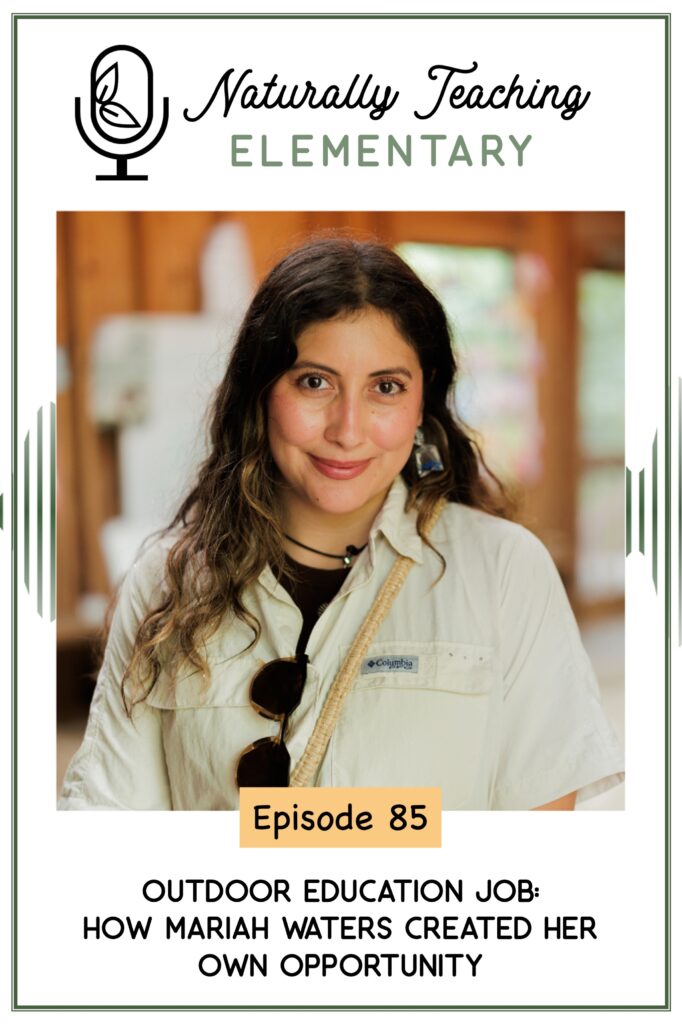
Mariah Waters is a Houston-based environmental educator who has spent nearly the past decade helping children build deeper relationships with the natural world through hands-on, place-based learning experiences. She holds a Bachelor of Science in Marine Biology from Texas A&M University at Galveston and a Master of Education in Nature-Based Early Childhood Education from Antioch University New England. As an educator, she is especially drawn to the ways curiosity, play, sensory exploration, storytelling, and seasonal change can help children feel more connected to both nature and themselves. Outside of teaching, Mariah enjoys swimming, reading, exploring coastal habitats, and taking walks with her husband and dog, Orca.
Connect with Mariah: www.linkedin.com/in/mariah-waters
[0:00] Victoria Zablocki
Hey, everybody, welcome back to the Naturally Teaching Elementary Podcast. It's the fifth Monday of the month, which means I'm going off theme this week. Instead of talking about something back to school related like I have all of August, I'm bringing you a fantastic interview that will get you super jazzed if you're looking for some alternative outdoor ed career ideas.
I got the opportunity to chat with Mariah Waters about a job that she created for herself by using her passion to highlight what we all know to be true, that nature in the classroom can benefit all. But before we get started, I just wanted to share some of Mariah's experiences with you. Mariah Waters is a Houston based environmental educator who has spent nearly the past decade helping children build deeper relationships with the natural world through hands on place-based learning experiences.
She holds a Bachelor of Science in Marine Biology from Texas A&M University at Galveston, and a Master of Education in Nature based early childhood education from Antioch University, New England. As an educator, she is especially drawn to the ways curiosity, play, sensory exploration, storytelling, and seasonal change can help children feel more connected to both nature and themselves. Outside of teaching, Mariah enjoys swimming, reading, exploring coastal habitats, and taking walks with her husband and dog, Orca. So let's get into this wonderful conversation.
[1:23] Victoria Zablocki
Teaching elementary aged children is a rewarding experience, but as educators and parents, finding the time and resources to create engaging lessons can be a challenge. That's where this podcast comes in.
Welcome to Naturally Teaching Elementary. I'm Victoria Zablocki, a certified elementary teacher turned outdoor educator. With over a decade of experience coaching teachers on effective teaching methods, I'm passionate about teaching the whole child with authentic and place-based experiences in school and home settings.
Join me as we explore strategies for teaching with practical teaching tips, insightful interviews, picture book reviews, and more. So let's grow together.
[2:00] Victoria Zablocki
Hey everybody, welcome back to the Naturally Teaching Elementary Podcast. I'm super excited. I have my first interview in, I think, like almost 18 months. I brought you Mariah Waters, and she's going to share her background. She knows herself best. So I'm going to let her take it away and share a little bit about herself.
[2:18] Mariah Waters
Hi everybody, my name is Mariah, and I'm a Houston-based environmental educator. I've been working in environmental education, I would say probably for the past, nearly the past decade. And I have a bachelor's degree in marine biology from Texas A&M University at Galveston. And I also have a master's in nature-based early childhood education from Antioch University in England.
And looking back, it's kind of a funny story, because I don't think that I would have predicted this career path for myself at all. During my time at A&M, I was completely convinced that I was going to become a marine mammal trainer.
You know, like one of the ones that you see teaching dolphins and orcas how to do flips and things. I just, I loved being out on the water, scuba diving, studying marine animals, and learning about coastal ecosystems. But it wasn't until my last semester that I took a part-time position with an environmental nonprofit that focused on coastal conservation and education.
And that's really where I feel everything changed for me as far as what I wanted to do with my group. And in that role, I was able to teach students about the local waterways, that they were connected to. And I did that through classroom workshops, where we brought in lessons to schools to teach them about those waterways.
And then another big piece of that role was taking them out into those places outdoors to experience them firsthand through field trips. So that was so fun and rewarding. Being able to watch children hold a tiny shrimp for the first time or use scientific tools that they thought were only meant for scientists made me realize how much I loved helping kids discover the natural world, just as much as I love studying it myself.
And so that experience eventually led me to pursue my masters. And in doing so, it completely changed the way I thought about outdoor learning for young children. It shifted my focus from just teaching children about nature, you know, the factual stuff, to creating experiences that help them build curiosity, confidence, and lasting relationships and connections with the nature around them, which also led me to the recent role that I was in.
[4:47] Victoria Zablocki
First off, that was wonderful. I had no idea about your background in that respect. And I love it because I'm from Michigan, so I don't have those experiences. But everything you just said, like it just made my heart happy. It just, it sounds wonderful. And I had like a similar experience, too, where I didn't know that I wanted to be an outdoor educator.
But just seeing kids experience nature, it's life changing. So I'm so glad you had those experiences and are going down the route that you're going now. But speaking of your role that you recently had, could you share what that role was that you experienced this last year?
[5:26] Mariah Wateres
Yeah. So this past year, I was the outdoor education specialist at a private independent school, an elementary school, where I developed and taught a weekly kindergarten through fifth grade outdoor education program. And I think the easiest way to describe it is that outdoor education became one of the school's weekly specials.
So alongside other specials like art, music, and Spanish. Every class came to me once a week for about 30 to 45 minutes, depending on the grade level. And with my classes, we were able to explore the school's outdoor spaces in different ways. So think about place-based learning, seasonal investigations, some scientific inquiry, sensory experiences, and lots of play and lots of exploration.
[6:15] Victoria Zablocki
So that sounds really wonderful, but it also sounds like a diamond in the rough. Can you describe how this role came about for you?
[6:24] Mariah Waters
Yeah, I'd love to share about that. I think it would be a little bit helpful to give some earlier context, just because it's actually kind of an interesting story how this role came to be. I had the opportunity to visit this private school.
That was one of the host sites for the Texas Children and Nature Network Conference that I was attending. And as soon as I visited the campus, I knew that it was a place that I wanted to be a part of. The school had beautiful outdoor spaces, and it was clear that they already valued getting students outside, which immediately caught my attention.
So fast forward to my first year there, I spent a lot of time learning the school culture and the dynamics of a formal school setting. I was also building relationships and paying attention to how those outdoor spaces were already being used, which was really helpful coming from an informal teaching background. The school already had an outdoor education program that students participated in about once a month, but that program focused primarily on team building, survival skills, things like leave no trace principles, and building confidence outdoors.
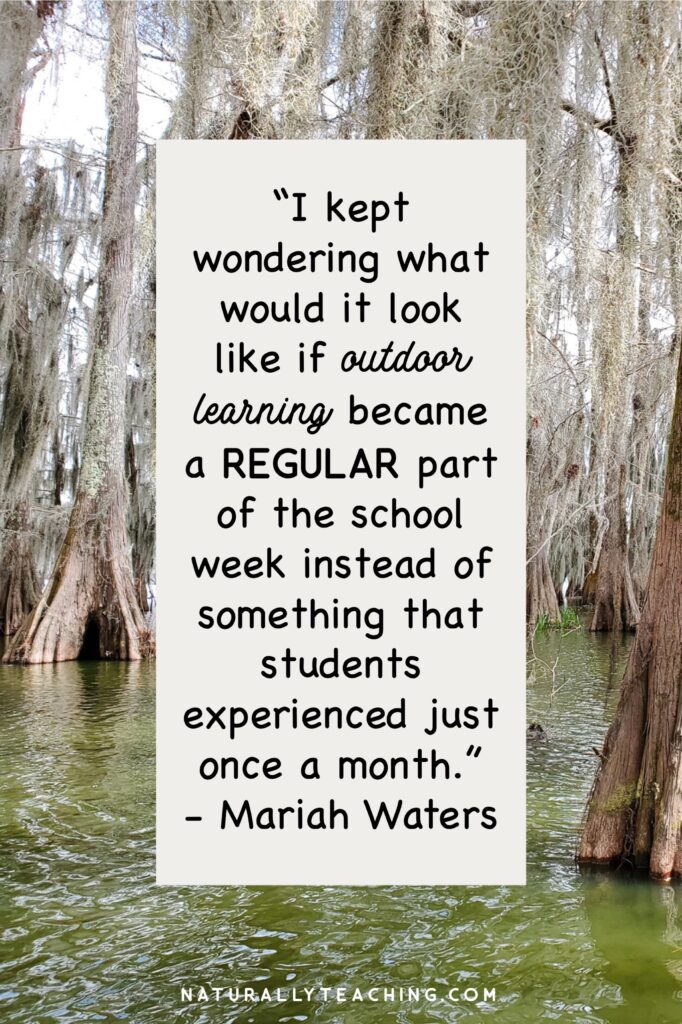
I thought that was a really great foundation because students were already getting outside and developing some skills and just the comfort of being outside. But because of my background in environmental education and place-based learning, I also started seeing opportunities to build on what was already there. So I kept wondering, you know, what would it look like if outdoor learning became a regular part of the school week instead of something that students experienced just once a month?
And the more I thought about it, the more I could picture a true role dedicated to helping outdoor learning become a more consistent and a more intentional part of the school experience. I envisioned a program where students could revisit the same outdoor spaces throughout the year and observe seasonal change, investigate real-world concepts and engage their senses, and build relationships, deeper relationships with the places that they were learning in, and also helping them to deepen what they were already learning in their regular classrooms, too. So I put together a proposal for a kindergarten through fifth grade outdoor education specials teacher role, and I shared that vision with school leadership.
And I made sure to provide some examples on how we could enhance our outdoor ed efforts, and I showed them what a better and a best scenario could look like. They were pretty receptive to my ideas. And when they said yes to me piloting the specials role, I was completely shocked.
And honestly, I'm just surprised and really excited. And at that point, I thought, yay, but also, oh my gosh, I really need to see this through now. You know, putting in the work to actually make it happen. So that's how I got into this role.
[9:38] Victoria Zablocki
That's wonderful. I don't think enough people realize that you can do these sorts of things. So I'm so glad that you brought up all of these different pieces of you saw value, you put something together and shared with leadership, and they were receptive.
And now they have this thriving program that you started. So with that, you have this program that you put together, but you didn't have a whole year to plan. You didn't have a whole year to get your bearings in order.
You were doing this day to day. So that's a really big job, writing a brand new curriculum while also teaching every day. Can you share how you happened to manage that?
[10:20] Mariah Waters
Yeah, that's a great question. Honestly, I managed it, like you said, one week at a time, sometimes one day at a time. And it probably was one of the biggest, if not the biggest challenges of the role.
Yeah, writing an entirely new curriculum while also teaching every day was a lot. So I had a general framework that I put together during our training days before school started. It was sort of like a skeleton-type outline for where I wanted each grade level to go throughout the year.
But many of the individual lessons were planned week by week. And that was mostly intentional-ish, because I wanted the curriculum to stay flexible enough to follow students' interests, questions, and the seasonal changes that were happening around us. One thing that I learned is that you don't have to build something like this by yourself.
In fact, I don't think that you should. Early in the year, I met with some classroom teachers and our director of curriculum a couple of times to get a glimpse into what students were learning in their classrooms, and think about ways outdoor learning could naturally connect with some of those experiences. Making connections to classroom learning was a big part of the role, but I also wanted to protect space, too, for experiences that didn't need a direct academic purpose, per se.
Sometimes the goal was simply to spend some time outside, notice new things, ask questions, and just build a relationship with the place itself. And outside of school, too, I leaned heavily on my own network of environmental educators. There were so many conversations over coffee, phone calls, and Zoom meetings where I'd bounce around lesson ideas, or ask for feedback, or just talk through challenges.
And Victoria, you're actually one of those people. So thank you. I'm super appreciative for all of the chats that we've had throughout the year.
And so having mentors and colleagues who understood this kind of work made a huge difference, especially since I was the only person on campus with an outdoor education background. Looking back, I'm really glad I didn't have every lesson planned out months in advance because it left room for students' curiosity to shape where we were going to go next.
Just to give a little example, early in the fall, we kept noticing squirrels all over campus, and students started asking questions about them. So we spent some time learning more about them, what they eat, where they live. And I even learned alongside them that a squirrel's nest is called a dray. So moments like that reminded me that I don't have to have all the answers as a teacher.
I think we have to leave room to be learners too, because those moments remind students and educators that we're all still learning. So while writing a brand new curriculum was definitely challenging, I don't think that I could have done it any other way. Having a framework gave me direction, but staying flexible allowed the curriculum to grow alongside the students, the seasons, and just the place that we were learning in.
[13:45] Victoria Zablocki
That was such a wonderful answer. Thank you. That was so positive and just, you could have thought about it in a different way, but just you can hear the passion in your voice and you can hear the benefits to nature for you, but also for the students and how you learned alongside them.
And the lifelong learner aspect, I think, is key for everybody. We don't know all the answers, we can't know all the answers. And if you think you do, then you're actually doing a disservice to yourself and your kids, so I love that.
From all of the experiences you had because, like you said, you met with K through 5 every week, you did a lot with them. Do you have a favorite activity or investigation from the school year?
[14:28] Mariah Waters
Yeah, gosh, that's a hard one. I feel like there's so many, but I think one that really sticks out. And actually students brought it up a few times during our end of year reflections, which is where we shared our favorite outdoor ed memories.
It was our sense of smell investigation. For this one, we started in the cabin and I had students close their eyes while I passed around these little scent tins that I'd prepared beforehand. Some of them had natural things like onions or orange slices and others had manmade things like Play-Doh or Cheetos.
And I wanted them to be familiar enough that they could have fun making guesses as to what they were. And so the whole point of it was just to kind of wake up that one sense before we headed into the forest. I had also prepared some other scent tins with items that I found in the forest, things like pine needles, laurel cherry leaves, and other items that had pretty potent smells.
And I had my students work in small groups to try to find the matching scent in the forest after smelling the ones that I brought. And I just really loved that one because they were working to focus on a sense that they probably didn't think they could use to really explore. Instead of relying on what they could see, they were slowing down, smelling leaves, comparing scents, talking with each other, and just really paying attention to details.
They probably would have walked right past any other day that we were out there. And being able to engage our sense of smell, along with focusing on our other senses one week at a time, at the beginning of the year, really paved the way for more intentional noticing during our different investigations throughout the rest of the year.
[16:21] Victoria Zablocki
That sounds like a lot of fun. So you were able to share with us some of the activities that you've done, and then with your background, you also shared with us that you're from Texas. I think it's really valuable for teachers to hear what spaces are, that other outdoor educators are working with.
Some feel like they don't have enough, or some feel like they're super limited. Are you able to share with us a description of what your outdoor learning space looked like?
[16:45] Mariah Waters
Yeah, this is a great question, because one, because I think it's important to acknowledge that we were incredibly fortunate. The school has a really unique campus with a variety of thoughtfully designed outdoor spaces, and I know that's not something that every school has access to. Some of the things that we had on our campus were a school garden, a chicken coop, a natural playground, and then probably our biggest asset was a few acres of forest that backed up to a bayou.
That forest became our primary outdoor classroom and the place that students visited week after week throughout the school year. I also had a small cabin that was near the entrance of the forest that I sort of took over and made my classroom. We usually started there to introduce the day's lesson or gather materials, ask questions, or just prepare ourselves for what we were going to be exploring outside that day.
If the weather didn't cooperate, it also kind of gave us a comfortable indoor space where we could retreat to and continue learning. But whenever we could, we were out in that forest. That said, as wonderful as those spaces were, I really feel that meaningful outdoor learning isn't dependent on having all of those spaces.
In fact, I don't feel like I use some of them as much as I originally thought I would. We kept returning to the same few places, and those became the places that students really got to know. So whether you have a school garden, a small courtyard space, a handful of trees, or even a single patch of nature on campus, it's those repeated experiences in the same place that I feel really helps students build that familiarity, that curiosity, and just that connection over time.
[18:38] Victoria Zablocki
Awesome. That's wonderful. You have such a nice way of putting things. I appreciate it. So this big job that you had for this last year, it was jam-packed full of wonderful things, but also there were a lot of things for you to have to juggle. What are your biggest takeaways from this opportunity that you'd like to share?
[18:59] Mariah Waters
Yeah, I think my biggest takeaway is probably realizing that outdoor learning isn't separate from education, even in formal school settings where nature educators like me are trying to provide more outdoor learning opportunities. Before this experience, I feel like I knew that philosophically and from my graduate studies, but after living it for a year, I got to see what it actually looked like in practice. And so outdoor learning became another way students experience science, literacy, math, art, and even relationships with one another.
It didn't replace classroom learning. I feel like it, if anything, it expanded it and it deepened where learning could happen. And that was really exciting to see because it reinforced something that I had hoped was possible, but hadn't yet experienced on that scale.
And so there's only so many books and articles and resources that I could go through and experiencing that for myself through this role was something that was really transformative for me.
[20:04] Victoria Zablocki
Awesome. After having a year under your belt, if you could go back in time and give yourself advice for the last year, what would you say to yourself?
[20:15] Mariah Waters
Yeah, I think I tell myself to just keep advocating for the role. I think when you're building something new, it's really easy to assume that once the role exists or once that thing exists, the advocacy is over. But I learned that advocating is actually part of the job.
I'd remind myself to keep speaking up for what students need and also what I needed, whether that's more time outdoors, additional resources or support from others, because people can't support something if they don't fully understand its value. And so I think that I'd also remind myself that it's okay to ask for help and to keep being bold in my belief for this work and maybe even give myself a little grace, and that I did the best that I could.
I'm pretty sure that I would want to go back and change many things. But I also think that I created something that is really meaningful, and I'm hopeful that my students will carry some of those experiences far in life.
[21:19] Victoria Zablocki
Awesome. Do you happen to have any advice for someone looking to do what you did, like advocating for their own position?
[21:27] Mariah Waters
Yeah. I think my biggest piece of advice would be to build your support system before you need it. Find other outdoor educators and reach out to people doing similar work, and don't be afraid to ask questions or to ask for help.
I think some of the best ideas that I had came from conversations with other people. And I also encourage anyone stepping into a new role like this to have conversations with school leadership early on about what support will look like throughout the year. If you're creating something from scratch, it's just really helpful to have shared expectations about things like collaboration, planning time and resources, and just ongoing support.
And also as an extra, maybe give yourself permission to grow as the role grows, and trust that the program doesn't have to be fully formed on day one. Some of the best parts of this experience for me was the things that I never could have planned for.
[22:30] Victoria Zablocki
That's great advice. Awesome. Well, thank you, Mariah. If anybody was hoping to reach out and talk to you, is there a way that they could get ahold of you?
[22:38] Mariah Waters
Yeah, I'm on LinkedIn, so if anybody would like to reach out to me that way, feel free.
[22:44] Victoria Zablocki
Awesome. And I'll put a link for that in the show notes, so you can check that out there.
All right. Well, thank you, Mariah, so much. This was wonderful and such a positive conversation. I appreciate your time.
[22:54] Mariah Waters
Thank you, Victoria. It was so much fun.
[22:57] Victoria Zablocki
Wasn't that great? I absolutely loved having this conversation with Mariah. She is just so positive. After a year where everything came hard and fast, she still sees the wonder of the kids, the blossoming of their relationships with nature, and her growth as an outdoor educator.
I just can't get over how courageous and confident she was to advocate for a position for herself, as well as a highly beneficial program that she started at a school. I am so grateful that Mariah let me have a second-row seat into her year in this position.
I enjoyed my time chatting in the evenings with her about her ideas, the reactions of the kids, and brainstorming ways to connect her local nature to the curriculum in meaningful and experiential ways. If you or someone you know is looking for help with brainstorming, planning, or otherwise developing a nature education program, send them my way. I've enjoyed the opportunity to consult with like-minded people and can be reached on Instagram at naturally.teaching or you can email me at victoria@naturallyteaching.com.
And don't forget to check out the show notes for this episode at naturallyteaching.com/episode85 for Mariah's information if you'd like to get in touch. So thanks for joining us today and until next time, keep exploring, keep learning, and keep naturally teaching.
Thank you so much for tuning in to today's episode of the Naturally Teaching Elementary podcast. I hope you found it informative, inspiring, and full of actionable insights to enhance your teaching journey. Connect with me on social media for more updates, science tidbits, and additional resources. You can find me on Instagram and Facebook at naturally.teaching.
Let's continue the conversation and share our passion for teaching elementary-aged children together. Don't forget to visit my website at naturallyteaching.com for all the show notes from today's episode. If you enjoyed today's episode, please consider leaving a review on your favorite podcast platform.
Your feedback helps me improve and reach more educators like you. Thank you again for listening, and until next time, keep exploring, keep learning, and keep naturally teaching.

0