![Exploring Invertebrates: 10 Picture Books to Introduce Animal Characteristics [ep. 9]](https://www.naturallyteaching.com/wp-content/uploads/2024/07/exploring-invertebrates-books-header-300x200.png)
![Learning Gardens: Creating Dynamic Outdoor Classrooms with Victoria Hackett [ep. 8]](https://www.naturallyteaching.com/wp-content/uploads/2024/07/learning-gardens-header-300x200.png)
Science
Frogs and Toads Together: Why do Amphibians Group Up?April 11, 2025

An elementary teacher science blog
As the school year approaches, let’s talk about some classroom decoration ideas that can help you plan for a successful year. And hopefully, they will also help you stress less as you get back into the space. Back-to-school time can be hard on everyone and I’m hoping to be able to lessen the load with these research-based ideas.
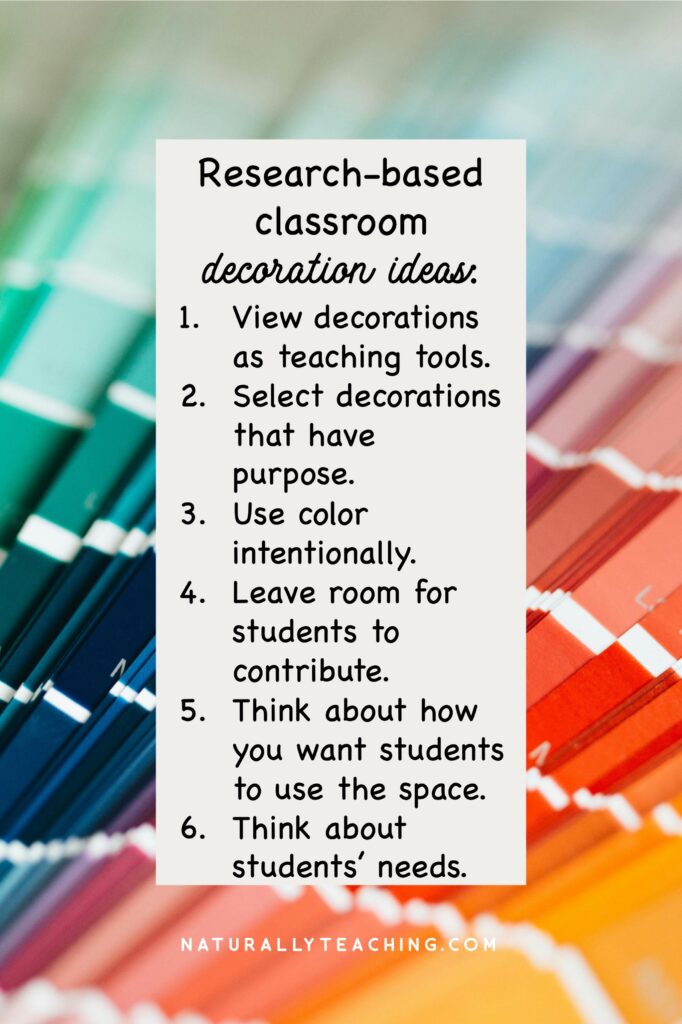
In this episode, we’ll talk about 6 research-based classroom decoration ideas including:
[0:00]
Teaching elementary-aged children is a rewarding experience, but as educators and parents, finding the time and resources to create engaging lessons can be a challenge. That's where this podcast comes in. Welcome to Naturally Teaching Elementary.
I'm Victoria Zablocki, a certified elementary teacher turned outdoor educator. With over a decade of experience coaching teachers on effective teaching methods, I'm passionate about teaching the whole child with authentic and place-based experiences in school and home settings. Join me as we explore strategies for teaching with practical teaching tips, insightful interviews, picture book reviews, and more.
So let's grow together. Hey, everybody. Welcome back to the Naturally Teaching Elementary podcast. If you listened to last week's episode, episode 81: 5 Strategies for Bringing Nature Into Your Classroom and Learning Spaces, you heard ideas for ways to bring nature inside to build a better connection with outdoors and reduce stress on your learners.
As I mentioned in that episode, I want to spend the month of August sharing different ideas to help you get ready for the next school year. And hopefully these topics will help you feel a little less stressed and a little more prepared.
This week, I want to focus on your indoor space as a whole, not just the nature side of things. There's a lot of noise online about how to set up your classroom, and it can put a lot of pressure on teachers and homeschool families to create a Pinterest perfect space. As always, I'm here to help.
I'm excited to share some research-based classroom decoration ideas today to support you in creating a space that is student-centered and set up for student success, because we should enjoy being in our teaching space, and it should support our learners. In this episode, I'm going to be sharing six classroom decoration ideas and how they can help you plan for a room that is successful for you and your learners. So let's get into these classroom decoration ideas.
[1:45]
So the first of the classroom decoration ideas I wanted to cover today is the mindset shift away from pursuing the Pinterest perfect or Instagram-worthy classroom, to viewing your classroom decorations as teaching and learning tools. Teachers and homeschool parents feel a lot of pressure to create a beautiful classroom or learning space. We see classrooms online that are beautiful.
They're coordinated, they have themes, they have perfectly designed bulletin boards, and it can be easy to look at those pictures and think that our classrooms need to look like that. But I want to remind you that a beautiful classroom is not automatically an effective classroom, and a simple learning space is not automatically an ineffective learning space. There is not one perfect classroom aesthetic that research says every teacher should recreate.
The best classroom is the one that serves the students who are actually going to be learning there. So if you love a colorful classroom, awesome. If you love a simple classroom, great. If you love decorating and creating a beautiful space, that's awesome too.
You do not need to remove everything that brings you joy. But you also do not need to spend enormous amounts of money or time trying to create a classroom that looks like someone else's.
The goal is not to create a room that looks good in a photograph. The goal is to create a room where students can learn, think, explore, and feel they belong. My hope is that the remainder of these classroom decoration ideas will help you find ways to support your students while also designing a space that you enjoy being in every day and fits your budget too.
[3:13]
The second of the classroom decoration ideas that I wanted to chat about today was selecting decorations that have a purpose. We want to be happy in our classrooms and learning spaces, but we also have limited space and asking yourself what function a decoration has can help you optimize the space that you do have. The research shows that decorations in classrooms that are aligned with student learning shows academic gains.
Something I'd like to point out though, is that decorations can have different purposes, and I've narrowed it down to three functions, but you may see more than that in your own classroom, and that's cool. To simplify this strategy, I'm going to categorize decorations as having a community building purpose, an academic connection, or an organizational function.
Community building is an incredibly important part of a classroom and learning space, especially in the early childhood years. Ensuring you have items around the room to build that community and remind your learners they're part of a family is crucial.
Some examples of this could be a bulletin board with student generated information about themselves, a community art piece they worked on together, positive affirmation spaces, if you use conscious discipline, a kindness tree or the safe place, aka a calming corner and more.
I tried to give you generic ideas so that you could decorate them according to your theme if you've decided to use one this year. Well, that's talking about classrooms and learning spaces. You know that some of your decorations should be academically focused.
This could include posters, number lines, phonetic alphabet lines, a bulletin board with “I can…” statements and more. One thing to note with the academically focused decorations is that they are more effective when they're aligned with what the children are learning in the moment. And since time is hard to come by as a teacher or a homeschool parent, I'm going to suggest that you make your academically inclined decorations responsive to your students.
What I mean by this is having these decorations reflect what your children are learning in real time with their help. Some examples of responsive decorations could be thinking maps, anchor charts, word walls that get added to over time, a student work display board, etc. These can all be completed alongside the learners, so putting them together is an exercise in learning, and it doesn't eat into your prep time.
This style of decorating, if you will, is like a living record of their questions, thinking, and overall learning process. Of course, you can still have your favorite poster about the water cycle, but if you lean mostly on student generated pieces, you'll be spending less time flipping decorations as your curriculum shifts throughout the year.
Thinking about decorations that have organizational functions, I'm thinking more colors and patterns to organize your classrooms to help your learners put things away or easily identify a change in subject.
If you're using an autumn forest color palette, for example, maybe science is green, social studies is brown, language arts is yellow, and math is orange. This visual cue will help your learners easily locate the items that are necessary for each subject shift and give them predictability in your space.
Alternatively, maybe you're using your autumn forest palette to designate areas in your learning space. Maybe the library is yellow, your math manipulatives are in orange containers, your calming corner is green, your creation and discovery area is brown, and your art and sensory area is red.
[6:26]
To piggyback off my last point, I want to talk more about color. The third of the classroom decoration ideas that I wanted to share about today is using color intentionally. So we already talked about how you can use color to help organize your classroom and learning space, but there are some other considerations to keep in mind when looking at using color intentionally.
Something that isn't thought about often is that you can also use color to distinguish a hierarchy in your decorations as well. Going back to the academic decorations, you may want your learners to focus on and regularly use certain displays or references like a phonetic alphabet line or a number line.
Giving these decorations warm and bright colors like red, orange, yellow, and neon will automatically catch learners' eyes and draw their attention. For secondary references like a word wall or student work display, cool colors like blues, greens, purples, and pastels can give them a more subtle look, which is less attention-grabbing than warm and bright colors.
You also want to make sure to leave white space in your classroom. This provides breaks for your learners' eyes and minds, giving them a more relaxed feel and space to breathe. Currently, there's no study that proves that you need to keep X amount of wall space white, but being intentional about giving visual breaks will benefit your learners and yourself.
[7:39]
The fourth of the classroom decoration ideas I wanted to chat about today is leaving room for students to contribute. We kind of touched on this when talking about responsive academic decorations, but I want to chat more about the benefits to you and to your learners when you leave space for them to fill. We already hit on time. By leaving some space blank for your learners, it will ultimately save you time at the forefront of the year as well as all year long.
And one of the benefits to your learners is that it creates a greater sense of ownership over the learning space, their learning process itself, and a sense of community. When a learner walks into a classroom and sees their work alongside their classmates' work, they feel connected and a part of their academic journey.
Research suggests that when students have a greater sense of ownership, there's a significant correlation with academic gains. Some suggestions for leaving room for your students include saving a bulletin board to display student work, working together to create displays as they're learning, photographing the learning process throughout the year and hanging those in the space, displaying student questions, create a what we're wondering wall, adding student created diagrams, models, writing, and artwork. Your learners are very creative and passionate, so let's give them a chance to shine with these living records of their learning.
[8:49]
The fifth of the classroom decoration ideas I wanted to chat about today is thinking about how you want the students to use this space. I'm talking about this strategy towards the end of our conversation because I feel like it's one of the middle to last steps in decorating your room. After you've started decorating and putting some things up, make sure to take a seat in a variety of viewpoints throughout the room. Putting yourself in your learner's shoes will help you see if there's too much going on around the front of the room or if there's a lamp that's shining right into the eyes of one of your learners to the side, or if there's too much visual noise near the calming corner, which makes it less calm.
These issues can be caught earlier if you try out different points of view in your classroom and learning space. When you're sitting in their desks or on the classroom rug, take a look around the whole space. What's drawing your attention?
What's blending into the background? Does any particular area feel too busy? If you notice a conflict, make some changes and take the perspective again. This may be a good exercise right when you return on a Monday so that you've had a couple of days to be absent from the space. It's also good to note that your decorations do not have to be set in stone on day one. You may like how things are laid out, and then you get your learners and realize that something didn't go as expected.
It's A-OK to make changes to reflect how you and your learners use this space, and it's A-OK to remove things that you thought would work and didn't. We're all learning, and what may have worked in the past may not work for this year's kiddos, and that's OK.
[10:09]
The sixth of the classroom decoration ideas I wanted to talk about today was thinking about decorating for different students' needs. Some children thrive in a space that is highly visually stimulating, while others find this overly stimulating and distracting. So something to keep in mind while you're decorating is that students have different attention, sensory, and learning needs.
Research suggests that early childhood learners are still developing the ability to regulate their attention. A lot of loud colors, bold fonts, and busy patterns can compete for their attention, whereas our adult brains may do a better job filtering out that visual noise. Keep this point in mind as you decorate your room and try to help them focus with some of the other tips we've already talked about, such as using color intentionally, creating a hierarchy with positioning and visual cues, and providing white space on the walls.
We do need to be careful, though, not to make broad assumptions about individual students. We can recognize that students have different attention sensory and learning needs, and that means it can be helpful to pay attention to how students respond to the environment around them. Are students frequently looking at things that are unrelated to the lesson? Are some areas of the classroom especially distracting?
Is there a quieter or less visually busy area where students can go when they need to work quietly? Are glare or brightness making it difficult for students to see? These are all things we can notice and adjust.
As I mentioned before, your classroom does not have to be perfect before students arrive. You can observe, notice, make changes, take things down, move things around, and add things when students need them. The classroom environment can be responsive to what your learners need.
[11:40]
So in a nutshell, today we talked about six classroom decoration ideas. These ideas were change your mindset to view decorations as teaching tools, select decorations that have purpose, leave room for students to contribute, think about how you want students to use this space, use color intentionally, and think about students' needs. The beginning of the year can feel very overwhelming, and I'm hoping these ideas will give you confidence in the decisions you make for the look of your classroom and learning space.
And if you're looking for nature-based decorations that follow these research-based strategies, check out my Forest Classroom Decor Growing Bundle. It currently includes a forest-inspired phonetic alphabet line, forest-themed number line, a set of editable forest nameplates, editable how we get home cards with a forest twist, and editable schedule cards with forest goodness. Hopefully, these classroom decoration ideas seemed achievable and helpful.
So I want to thank you for taking time to listen today. I know you're busy and I truly appreciate the time you take to tune in. If you have any questions, wonderings, or classroom decoration ideas that you want to share, get a hold of me on Instagram at Naturally.Teaching, or you can email me at victoria@naturallyteaching.com.
And don't forget to check out the show notes for this episode on naturallyteaching.com/episode82. So thanks again for joining me today. And until next time, keep exploring, keep learning, and keep naturally teaching.
Thank you so much for tuning in to today's episode of the Naturally Teaching Elementary Podcast. I hope you found it informative, inspiring, and full of actionable insights to enhance your teaching journey. Connect with me on social media for more updates, science tidbits, and additional resources.
You can find me on Instagram and Facebook at Naturally.Teaching. Let's continue the conversation and share our passion for teaching elementary age children together. Don't forget to visit my website at naturallyteaching.com for all the show notes from today's episode.
If you enjoyed today's episode, please consider leaving a review on your favorite podcast platform. Your feedback helps me improve and reach more educators like you. Thank you again for listening, and until next time, keep exploring, keep learning, and keep naturally teaching.

0